
5 Pack 3.3V Buck Module
5.0Editor score
Ultra small 17.5mm footprint
1.8A max output capacity
Less than 30mV ripple
This guide compares ten top-rated 5V to 3V voltage regulator modules for stable power delivery to microcontrollers sensors and embedded electronics projects.
Finding the right voltage regulator is crucial for powering sensitive electronics like microcontrollers and sensors. A good module ensures stable output while handling input fluctuations efficiently.
We compared ten highly-rated buck converters and linear regulators based on current capacity size and protection features to help you select the best option for your needs.
Each pick highlights specific strengths and trade-offs so you can match the regulator to your project requirements. Prices and availability may change so check current listings before buying.
5.0Editor score

4.6Editor score

5.0Editor score
The following table provides a side-by-side comparison of all ten regulators including their input ranges output currents and key protection features for easy reference.


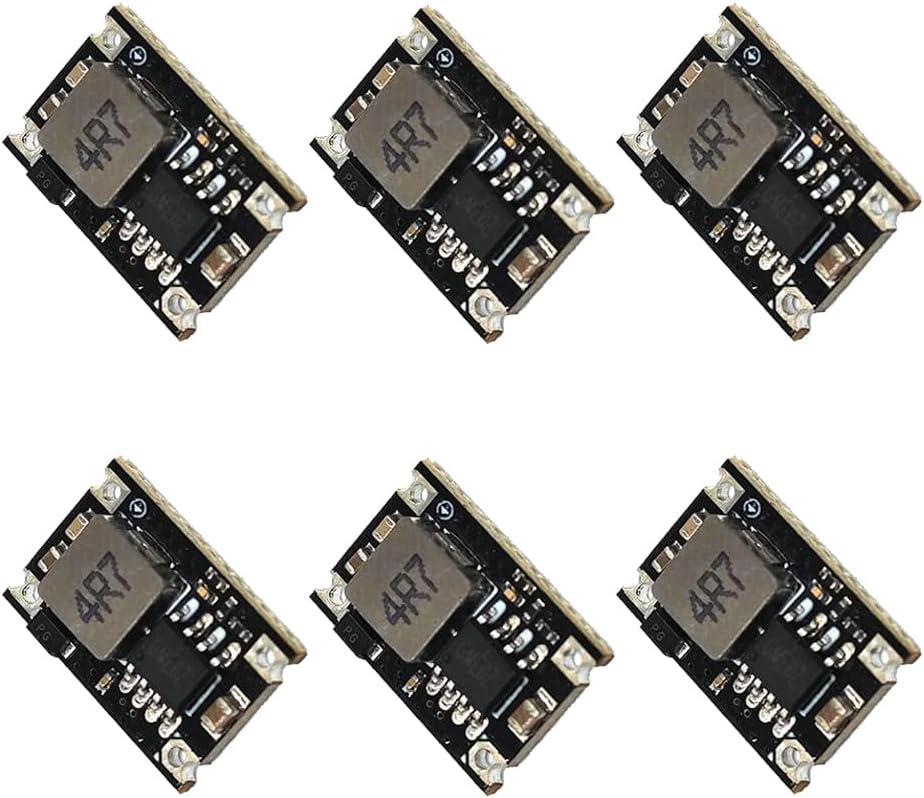
This buck converter module stands out as the top pick due to its wide input range and high current capacity. It is rated highly for providing stable 3.3V power to various electronics.
We may earn a commission when you buy through this link, at no additional cost to you.
The wide input of 4.5V to 24V allows it to work with common battery packs and power supplies. Its ability to deliver up to 1.8A makes it suitable for driving motors or multiple sensors.
While it is powerful it does require external diodes and capacitors when used with inductive loads like motors. This is a minor trade-off for the flexibility it provides.
This module is ideal for hobbyists and engineers who need a versatile and reliable regulator for multiple projects. It offers excellent performance for the price.
The 4.5V to 24V input range means you can use it with 5V 9V 12V or 24V power sources without needing extra components.
With a switching frequency of 1MHz to 1.5MHz and low ripple this module keeps your sensitive electronics safe from voltage fluctuations.
We may earn a commission when you buy through this link, at no additional cost to you.
This mini reducer module is an excellent budget option that does not compromise on performance. It has perfect ratings for its small size and high current delivery.
We may earn a commission when you buy through this link, at no additional cost to you.
At just 17.5mm it fits easily into tight spaces in portable or embedded projects. It can deliver up to 1.8A with minimal ripple ensuring clean power for your circuits.
The main limitation is that it lacks built-in overload protection so you may need to add fuses or Zener diodes for safety with inductive loads.
For makers building multiple devices or working in confined areas this module is a smart choice. It delivers high performance at a very low cost.
Its tiny 17.5×12.3×4.3mm footprint makes it perfect for wearable tech drones or any project where board space is limited.
Delivering up to 1.8A means it can power larger loads like servos or WiFi modules without overheating under normal conditions.
We may earn a commission when you buy through this link, at no additional cost to you.
This AMS1117 linear regulator is perfect for projects where low noise is critical. It is rated highly for its stability and built-in safety features.
We may earn a commission when you buy through this link, at no additional cost to you.
The LDO design ensures minimal voltage fluctuation even when the load changes. It is ideal for powering sensitive analog sensors or audio circuits.
While it has a lower current limit of 800mA compared to buck converters it provides a cleaner output without switching noise which is valuable for precision tasks.
Choose this regulator if you need a simple reliable and quiet power source for your electronics. It is especially good for battery powered devices.
As a linear regulator it does not generate high frequency switching noise making it safer for sensitive analog components.
Overheat and overcurrent protection prevent damage to the chip or your circuit during abnormal operating conditions.
We may earn a commission when you buy through this link, at no additional cost to you.
This converter is designed for very low power projects that run on single cell batteries. It can step up or down to maintain a stable 3.3V output.
We may earn a commission when you buy through this link, at no additional cost to you.
Its ability to work with inputs as low as 1.8V makes it unique for battery powered applications where voltage drops over time.
The 100mA limit restricts it to sensors or small microcontrollers. It cannot handle motors or WiFi modules but is ideal for sleep mode circuits.
If you are building a battery operated sensor node this module is an excellent choice. It maximizes battery life with efficient regulation.
The 1.8V to 5V input means you can use it with 1.5V AA batteries or lithium cells without worrying about undervoltage.
By boosting or bucking as needed it ensures consistent power delivery even as the battery voltage drops during use.
We may earn a commission when you buy through this link, at no additional cost to you.
This mini reducer is another top contender for high current applications. It is rated highly for its ability to deliver power reliably under heavy loads.
We may earn a commission when you buy through this link, at no additional cost to you.
The input range of 5V to 30V allows it to handle higher voltage supplies without issue. It delivers up to 1.8A with low ripple.
Similar to other buck modules it requires external protection for inductive loads. This is standard practice for this type of converter.
Choose this for projects that need significant current like motor drivers or multiple peripherals. It is a reliable workhorse for demanding circuits.
Up to 1.8A output means you can power larger components without needing parallel regulators or complex setups.
Even at full load the output remains stable with minimal voltage drop ensuring your devices run consistently.
We may earn a commission when you buy through this link, at no additional cost to you.
This Dorhea pack uses linear regulation which is best for circuits that are sensitive to noise. It is rated for consistent power delivery.
We may earn a commission when you buy through this link, at no additional cost to you.
The linear design means less heat generation from switching but slightly lower efficiency. It is perfect for audio or precision analog circuits.
The current limit of 800mA is lower than buck converters but sufficient for most microcontroller projects. Overheat protection adds safety.
Select this if noise is your primary concern and you do not need high current. It is a solid choice for sensitive electronics.
As a linear regulator it produces a very clean output without switching noise which is ideal for audio or sensor circuits.
Built-in thermal shutdown prevents damage if the device gets too hot during extended use.
We may earn a commission when you buy through this link, at no additional cost to you.
This module is designed for extreme compactness without sacrificing current capacity. It is ideal for portable devices or tight layouts.
We may earn a commission when you buy through this link, at no additional cost to you.
The 1.8A output ensures it can handle most standard loads. Its reverse polarity mark helps prevent accidental connection errors.
However customer ratings are lower which may indicate some units arrive with issues. The small solder pads can be challenging for beginners.
Use this if space is the main constraint. It offers strong performance in a tiny form factor but requires careful handling.
At just 0.67 inches it fits in the smallest projects where every millimeter counts.
The board includes markings to help you connect power correctly and avoid damaging the module.
We may earn a commission when you buy through this link, at no additional cost to you.
This converter is designed for higher voltage inputs up to 30V making it suitable for solar panels or vehicle systems. It ensures stable 3.3V output.
We may earn a commission when you buy through this link, at no additional cost to you.
Its wide input range allows flexibility in power sources. It is tested before shipping for reliability in prototyping.
While no rating is available the specs suggest strong performance. It is a good choice for high voltage applications.
Use this for projects powered by 24V batteries or solar setups. It handles high input safely and efficiently.
Input up to 30V means it can step down higher voltage batteries without damage.
Each unit is tested to ensure it meets performance standards before you receive it.
We may earn a commission when you buy through this link, at no additional cost to you.
This pack is optimized for systems that run on 5V USB power or similar sources. It steps down to 3.3V efficiently for microcontrollers.
We may earn a commission when you buy through this link, at no additional cost to you.
The AMS1117 design ensures stability with low noise. It is perfect for Arduino or ESP projects powered by USB.
The input range is narrow so it does not work with higher voltages. This limitation makes it ideal for specific USB applications.
Choose this for USB powered projects where simplicity is key. The 10 pack ensures you have enough spares for multiple boards.
Perfect for 5V USB powered projects stepping down to 3.3V for your microcontrollers.
Ten units in one pack give you plenty for multiple boards or replacements without extra cost.
We may earn a commission when you buy through this link, at no additional cost to you.
This module is designed for aircraft models and portable devices where weight and space matter. It delivers high current in a tiny package.
We may earn a commission when you buy through this link, at no additional cost to you.
The MP1584EN chip ensures efficient power conversion. It is rated highly for stable performance under load.
The size is ultra compact allowing it to fit in drones or RC planes. It handles up to 1.8A easily.
Use this for RC projects or portable electronics. It combines power and compactness effectively.
Its small size and high current make it perfect for drones and aircraft where every gram counts.
Uses the MP1584EN chip which is known for high efficiency and low heat generation.
We may earn a commission when you buy through this link, at no additional cost to you.
Choosing the right regulator requires balancing input range current output and size. This guide outlines the factors to consider for your project.
Ensure the regulator accepts your power source voltage. Some work with 5V to 24V while others are limited to 12V or less.
Pick a module with an input range that matches your battery or supply to avoid damage or instability.
Calculate the total current your circuit draws. Regulators with 1.8A output are better for motors while 800mA is enough for microcontrollers.
Select a unit that exceeds your peak current needs to prevent overheating and ensure stability.
Linear regulators like AMS1117 are quiet but less efficient. Buck converters are efficient but produce switching noise.
Choose linear for audio or sensors and buck for battery powered or high current applications.
Compact modules like 17mm buck converters save space on small PCBs. Larger ones may have better heat dissipation.
Consider your board layout to ensure the regulator fits without interfering with other components.
Look for built-in thermal or overcurrent protection. Some modules require external components for inductive loads.
Add capacitors or diodes when using motors to prevent voltage spikes from damaging the regulator.
Buying packs of 5 or 10 is cost effective for prototyping. Single units are fine for one-off projects.
Consider having spares in case a module fails during testing or development.
Low ripple like 30mV is essential for sensitive electronics. Buck converters can produce noise affecting analog circuits.
Check the ripple specs to ensure the module meets the noise requirements of your application.
Connect input power to VIN and output to OUT while grounding GND. Ensure you have capacitors on input and output for stability.
Avoid exceeding the max current rating. Use heat sinks or cooling if running at high currents for extended periods.
Test with a multimeter to confirm 3.3V output before connecting sensitive devices. Double check polarity to prevent short circuits.
Yes if the regulator accepts 5V input. Most buck converters in this list accept 5V and drop it to 3.3V efficiently. Check the input range before connecting.
Linear regulators are quieter but less efficient while buck converters are efficient but produce switching noise. Buck converters are better for high current or battery powered projects.
Yes input and output capacitors help stabilize the voltage. Many modules include them but adding external ones improves performance especially with motors.
Most Arduino boards need around 500mA to 800mA. A regulator rated for 800mA or higher is sufficient. For projects with multiple sensors consider 1.8A.
Heat is caused by high current or low efficiency. Use a heat sink or choose a buck converter for better efficiency. Ensure you are not exceeding the max current.
Yes buck converters work with solar panels that output 5V to 24V. Ensure the input range matches your panel voltage and add protection for inductive loads.
The top picks include versatile buck converters for high current needs and linear regulators for low noise applications. Choose based on your input source and load requirements.
Prioritize current capacity and protection features. Always test your power delivery before connecting expensive electronics.
Prices and availability change frequently. Check current listings to ensure you get the best deal for your project needs.