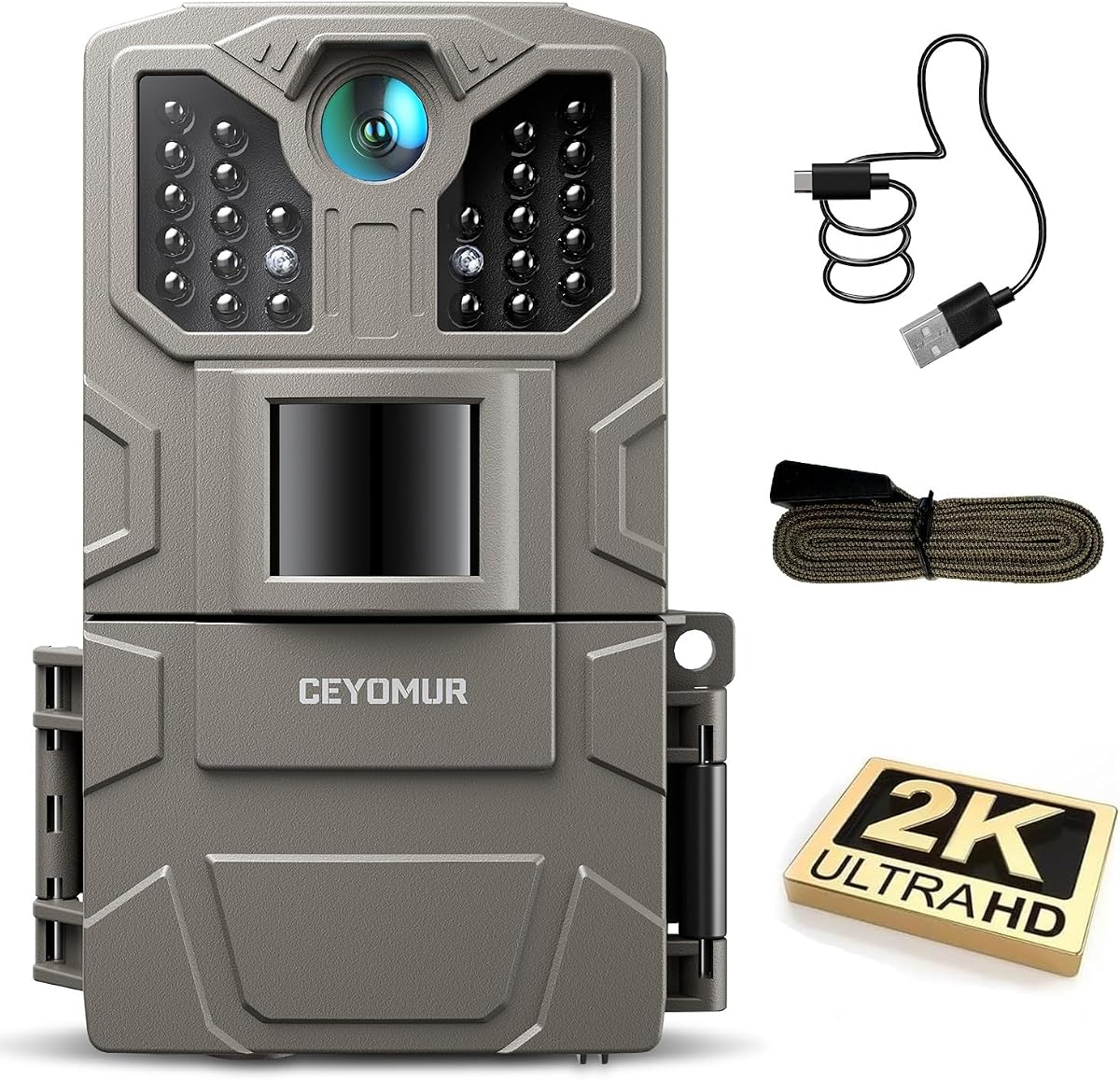
CEYOMUR Trail Camera
4.0Editor score
Simple operation for beginners
IP66 waterproof rating
Fast trigger speed
This guide compares the top 10 battery life trail camera options for 2026. We analyze power efficiency, solar options, and runtime to help you choose the best
Choosing a trail camera with exceptional battery life is crucial for effective wildlife monitoring and security. Without reliable power, your device risks missing critical moments in the field. This guide focuses on models known for extended runtime and efficient energy management.
We evaluated ten leading trail cameras based on their power systems, sensor efficiency, and real-world usage reports. Our analysis considers standard battery compatibility, solar readiness, and low-power modes to ensure you find a camera that lasts.
Each pick highlights specific strengths like trigger speed, night vision range, and power flexibility. Prices and availability change frequently so always verify current details before purchasing to ensure you get the best value for your investment today.
4.0Editor score

4.2Editor score

4.3Editor score
The following table provides a side-by-side comparison of all ten models ranked in this guide. We highlight key specifications like resolution, trigger speed, and power features to help you quickly identify the right fit for your specific monitoring needs.


The MAXDONE Solar Trail Camera stands out for its impressive power efficiency and convenient connectivity options. With a built-in 6000mAh rechargeable battery and high-efficiency solar charging, this unit offers nearly unlimited power for long-term outdoor use without frequent battery swaps.
We may earn a commission when you buy through this link, at no additional cost to you.
Its solar integration ensures that you can monitor wildlife year-round with minimal maintenance. The camera supports WiFi and Bluetooth app control, allowing you to view and download photos directly without removing the SD card. This feature saves time and reduces wear on the device ports.
While the solar panel is integrated and not detachable, it provides consistent power in most outdoor conditions. The 0.1s trigger speed ensures you capture fast-moving animals without blur. The IP66 waterproof rating makes it reliable in harsh weather environments like rain or snow.
This camera is ideal for users who want a set-and-forget solution for property security or wildlife tracking. The lack of subscription fees for the app adds significant value compared to cellular models. If you need a solar-powered option with reliable performance, this is a top contender.
The integrated solar panel works with the internal battery to provide continuous operation. This means you rarely need to replace batteries, saving time and cost over long monitoring periods.
WiFi and Bluetooth allow for easy setup and photo retrieval using your smartphone. The built-in hotspot connection works up to 55ft, making it convenient to check footage on the spot.
We may earn a commission when you buy through this link, at no additional cost to you.
The Moultrie Edge 3 Cellular Trail Camera is designed for hunters and landowners who need instant access to wildlife data. With real-time alerts and AI buck detection, you can track specific animals without physically visiting the site constantly. This technology significantly reduces false alerts and saves battery on unnecessary captures.
We may earn a commission when you buy through this link, at no additional cost to you.
The camera connects automatically to the strongest of four major networks ensuring reliable delivery even in remote areas. The rechargeable lithium battery options and solar panel compatibility help extend usage periods between charges. This flexibility is crucial for long-season monitoring where frequent battery changes are impractical.
While the service plan adds to the overall cost, the convenience of remote access justifies it for many users. The ability to control feeders remotely adds another layer of utility. The GPS mapping feature ensures you know exactly where each camera is placed if you lose track.
This model is best suited for serious hunters who prioritize immediate intel over cost savings. The combination of cellular connectivity and AI features sets it apart from standard trail cameras. If you need to know when and where mature bucks move in real-time, this is an excellent investment.
Moultrie AI identifies bucks and delivers high-resolution images specifically. This reduces the number of false alerts caused by wind or small animals saving you time and data.
You can check battery levels and control feeders directly from the app. This minimizes your need to enter the property frequently reducing disturbance to wildlife patterns.
We may earn a commission when you buy through this link, at no additional cost to you.
The CEYOMUR Trail Camera offers a straightforward and cost-effective solution for wildlife monitoring. It is designed for first-time users who need a reliable camera without complex features. The integrated design places all controls on one side making setup faster and more convenient in the field.
We may earn a commission when you buy through this link, at no additional cost to you.
Its powerful night vision system uses 850nm infrared LEDs which produce brighter and sharper images than many competitors. This ensures clear identification of animals even in complete darkness. The fast trigger speed and snappy recovery time mean you capture every action without missing a moment.
While it does not have advanced power-saving modes like solar compatibility, it uses standard AA batteries which are widely available. The solid brown housing blends reasonably well but may not be as stealthy as camouflage models. For beginners, this simplicity is a major advantage.
This camera is perfect for backyard monitoring or small property surveillance where budget is a priority. The IP66 waterproof rating ensures it withstands rain and dust reliably. If you want a simple entry-level camera that delivers clear results without a steep learning curve, this is a strong choice.
Unlike traditional flip-open designs this camera has controls on one side. You can adjust angles and preview shots without repositioning the unit saving time during installation.
The 850nm LEDs provide brighter images with less noise. This helps you see details clearly in the dark which is essential for identifying animals accurately.
We may earn a commission when you buy through this link, at no additional cost to you.
The WOSPORTS Trail Camera combines high resolution with versatile power options making it a strong all-rounder. It captures sharp 64MP photos and smooth 4K videos which provide exceptional detail for wildlife identification. The no-glow night vision ensures animals are not startled by visible light during night shoots.
We may earn a commission when you buy through this link, at no additional cost to you.
One of its best features is the flexibility in power sources. It runs on 8 AA batteries but also supports rechargeable lithium batteries and compatible solar panels. This hybrid approach allows you to extend monitoring periods significantly in the field. The wide detection angle helps cover large areas effectively.
The camera features a 2-inch color LCD screen which makes previewing photos and videos easy without a computer. Password protection adds a layer of security for your data. While it lacks cellular connectivity for remote access the quality of images and video is excellent for local retrieval.
This model is ideal for property surveillance and deer scouting where high detail is required. The ability to use solar power makes it cost-effective over time. If you need a reliable camera with detailed image quality and flexible power solutions, this WOSPORTS unit is a great fit.
With 64MP resolution and 4K video this camera captures detailed images that reveal textures and fur. This clarity is essential for identifying individual animals in a herd.
You can use standard batteries rechargeable lithium packs or solar power. This variety ensures you can adapt the camera to your specific remote needs effectively.
We may earn a commission when you buy through this link, at no additional cost to you.
The Meidase P70 is engineered for speed and clarity ensuring you never miss fast-moving wildlife. Its 0.1s trigger speed is among the fastest in its class allowing it to capture animals instantly as they enter the frame. Side sensors enhance detection accuracy to prevent misses.
We may earn a commission when you buy through this link, at no additional cost to you.
Video performance is optimized with H.264 technology which compresses files without losing quality. This means faster downloads and seamless viewing on any device. The 100ft no-glow night vision provides clear footage without spooking sensitive animals. The 2.4-inch color display makes field reviews simple.
Solar readiness adds to its utility for long-term deployments. Pairing it with the compatible solar panel ensures continuous operation without battery swaps. The compact design is easy to conceal and mount on various surfaces. While it lacks Wi-Fi the speed and image quality make it a solid choice.
This camera is perfect for hunting and wildlife tracking where reaction time matters. The combination of fast triggering and efficient video compression balances performance and storage. If you need a camera that captures every moment with precision and clear night vision the Meidase P70 delivers strong results.
The 0.1s trigger ensures even fast deer are captured cleanly. This speed prevents the blur that often occurs with slower cameras during rapid movement.
H.264 compression keeps file sizes small while maintaining HD quality. This allows you to store more footage on your SD card and download it quickly.
We may earn a commission when you buy through this link, at no additional cost to you.
The WOSPORTS Mini Trail Camera is designed for portability and ease of use. Its compact body measures just 4.25 inches and weighs under a pound making it easy to carry and install anywhere. The camouflage design helps it blend naturally into forests and fields reducing visibility to animals.
We may earn a commission when you buy through this link, at no additional cost to you.
Powered by 4 AA batteries it offers low power consumption that supports longer standby times. The 850nm infrared LEDs provide clear night vision images without disturbing wildlife. Fast trigger response ensures you catch passing animals quickly. This model is ideal for short-term monitoring or multiple site setups.
While the resolution is lower than larger models it still captures detailed 30MP photos and 1080P HD videos. This is sufficient for most wildlife identification needs. The simple setup process allows users to start monitoring immediately after inserting batteries and an SD card.
This mini camera is great for beginners or for checking multiple areas without spending too much on each unit. It works well in gardens backyards or on farms. If you need a lightweight discreet camera for general observation the WOSPORTS Mini offers excellent value and performance.
Weighing only 0.73lb this camera is easy to move between locations. You can monitor several sites without carrying heavy gear in your pack.
The low-power design allows for extended standby time. This means you can leave it out longer on fewer battery changes which is convenient for remote spots.
We may earn a commission when you buy through this link, at no additional cost to you.
The GardePro E5S is focused on efficiency making it a great choice for eco-friendly monitoring. Its non-cellular and non-WiFi design ensures minimal power use which reduces battery changes. The 64MP photos and 1296P HD videos capture detailed footage day and night with reliability.
We may earn a commission when you buy through this link, at no additional cost to you.
Three PIR sensors enable a lightning-fast 0.1s trigger speed that never misses fast-moving wildlife. The camera is built to withstand harsh conditions with an IP66 waterproof rating and a durable mounting thread. This rugged design ensures it performs well in rain snow or extreme heat.
Solar compatibility allows for continuous operation when paired with the optional panel. The 8 AA batteries serve as a reliable backup for cloudy days. The low-power operation ensures fewer battery swaps compared to standard cameras. This makes it ideal for long-term deployment in remote areas.
This camera is best for users who want high performance without constant maintenance. The combination of fast triggering and energy efficiency offers a balanced solution. If you need a durable camera that works efficiently for months on end the GardePro E5S is a top recommendation.
Non-cellular design minimizes power consumption significantly. You can leave the camera out longer without worrying about running out of power quickly.
The IP66 waterproof rating keeps internal components safe from moisture and dust. The sturdy body ensures it survives tough outdoor environments without damage.
We may earn a commission when you buy through this link, at no additional cost to you.
The WOSPORTS Mini 2 Pack provides a complete kit for monitoring multiple locations. Each camera comes with a 16GB SD card included which simplifies setup and reduces accessory costs. The compact design helps you monitor different trails or zones simultaneously without drawing attention.
We may earn a commission when you buy through this link, at no additional cost to you.
Powered by 4 AA batteries the low power consumption extends standby time for both units. The 850nm infrared night vision provides clear black-and-white images. A 0.3s trigger speed ensures animals are captured with minimal delay. This bundle is perfect for covering larger properties with fewer batteries.
While the SD cards are limited to 16GB they are sufficient for moderate usage. The camouflage design blends naturally into forests and farms. If you need to track activity in more than one area this 2-pack offers a cost-effective solution without compromising on essential features.
This bundle is ideal for beginners who want to expand their monitoring coverage quickly. The ease of setup means you can start capturing footage right away. If you need reliable performance across multiple points on your land this 2-pack delivers solid value and utility.
Getting two cameras with SD cards included saves time and money. You get everything needed to start monitoring multiple sites immediately.
You can place cameras at different entry points to get a full view. This helps you understand wildlife patterns across your entire property.
We may earn a commission when you buy through this link, at no additional cost to you.
The WOSODA Mini 4 Pack delivers a comprehensive solution for extensive wildlife monitoring. It includes four cameras each with 16GB SD cards and 16pcs AA batteries so you have everything needed for immediate deployment. This all-in-one kit removes the hassle of sourcing accessories separately.
We may earn a commission when you buy through this link, at no additional cost to you.
Each unit uses just 4 AA batteries for low power consumption and extended standby times. The compact and camouflage design ensures stealth in natural environments. With a 0.3s trigger speed the cameras capture fast movements reliably. This setup is ideal for large farms or properties needing full coverage.
The inclusion of batteries is a significant advantage over other kits that require you to buy them separately. The 30MP photos and 1080P HD videos provide clear details for identification. While you cannot view photos remotely without an SD card reader the local storage is reliable.
This set is perfect for landowners who need to track activity across multiple zones. The ease of setup and included accessories make it a practical choice. If you want a complete kit that simplifies setup and coverage this 4-pack offers unmatched convenience and value.
Batteries and SD cards are included for all four cameras. This ensures you can set up the entire kit immediately without extra purchases.
Running on 4 AA batteries extends standby time significantly. This reduces the frequency of changes and helps maintain continuous monitoring.
We may earn a commission when you buy through this link, at no additional cost to you.
The GardePro E5S 2-Pack brings high-end specs to a bundle for multi-site monitoring. Each camera captures 64MP photos and 1296P HD videos ensuring detailed footage. The low-power operation minimizes battery use and supports long deployments with minimal maintenance required in the field.
We may earn a commission when you buy through this link, at no additional cost to you.
These units are designed for durability with an IP66 waterproof rating and sturdy mounting threads. The 0.1s trigger speed captures fast wildlife accurately. You can choose from motion detection time-lapse or hybrid modes to suit your specific needs. Support for up to 512GB SD cards offers massive storage capacity.
Solar compatibility ensures reliable power even in remote areas when paired with the panel. The flexible recording modes help balance battery and storage usage effectively. This bundle is best for those needing two high-performance units without cellular costs. The rugged build ensures consistent performance in tough weather.
If you need two durable cameras for a farm or ranch this pack offers great quality. The ability to store large amounts of data without frequent swaps is a major benefit. If you prioritize high resolution and storage capacity in a rugged bundle this is an excellent option.
Support for 512GB SD cards means you can store months of footage. This reduces the need to visit the site often to change cards.
You can switch between motion and time-lapse modes. This flexibility helps you conserve battery and storage depending on your monitoring goals.
We may earn a commission when you buy through this link, at no additional cost to you.
Selecting the right trail camera depends heavily on how you plan to use it and how long you need it to run. This guide breaks down the key factors that influence battery life and overall performance.
Standard AA alkaline batteries are the most common and affordable option. However lithium batteries offer longer life and perform better in cold weather. Some cameras also support rechargeable lithium packs which reduce waste and cost over time.
Check how many batteries the camera requires as models use between 4 and 8 AA cells. More batteries generally mean longer life but add weight and cost. Consider your local availability and whether you can use solar options to extend runtime significantly.
Solar compatibility is a game-changer for long-term monitoring. Many cameras allow you to pair a solar panel to keep the battery charged continuously. This reduces the need for frequent visits to change batteries in remote areas.
Ensure the camera has a dedicated port for solar input and verify the panel compatibility. Not all solar panels fit every camera so check the manual before purchasing. Solar power is essential if you want truly set-and-forget monitoring.
Trigger speed determines how quickly the camera takes a photo after motion is detected. Faster speeds like 0.1s ensure you capture moving animals without blur. Recovery time is the time between shots and affects how many pictures you can take in a burst.
Lower trigger speeds save power because the camera stays awake for less time. Choose a balance that suits your target species. Fast triggers are vital for hunting but might drain batteries faster if set to continuous capture modes.
Higher resolution photos like 64MP provide more detail but use more processing power and storage. Lower resolutions like 30MP save battery life and SD card space. Decide based on how much detail you need for identification.
HD video recording consumes significantly more power than still images. Use video selectively or set to low resolutions if battery life is a priority. Many cameras allow you to disable video entirely to extend battery duration.
Detection range is how far the camera can sense motion while sensitivity determines how much movement is needed to trigger a shot. Wider ranges often mean the camera uses more power to scan the area continuously.
Adjust sensitivity based on your environment to avoid false triggers from wind or leaves. High sensitivity can drain batteries quickly if not calibrated correctly. Test the settings in the field to find the optimal balance for your specific needs.
Cellular cameras send photos to your phone but consume more power due to transmission. Non-WiFi models use standard batteries and last longer since they do not transmit data. Decide if real-time access is worth the extra energy cost.
App-controlled cameras often use Bluetooth to connect which is more efficient than cellular. This lets you check footage without removing the SD card. However keep in mind that enabling connectivity modes usually shortens overall battery life.
A rugged build ensures your camera survives rain snow and extreme temperatures which protects your investment. IP66 ratings indicate waterproofing and dustproofing suitable for harsh conditions. Extreme cold can reduce battery efficiency so choose models tested for your climate.
Check the operating temperature range before purchasing for cold regions. Some cameras have internal heating or better insulation to handle freezing temps. A durable casing also prevents internal damage from humidity which prolongs the life of the battery compartment.
Look for features like sleep modes time-lapse settings or motion zones that limit activity to specific areas. These features reduce the number of shots and power used. Time-lapse captures images at set intervals instead of motion which saves substantial power.
Many cameras allow you to schedule active hours so they turn off at night or during quiet times. This feature significantly extends battery life by avoiding unnecessary scanning. Check the menu options to see how much control you have over power settings.
Start by installing fresh batteries or charging the internal pack fully before mounting. For best results use high-quality lithium alkaline batteries especially in colder weather. Insert the SD card and format it in the camera to ensure proper recording.
Mount the camera securely on a tree or post at about 3 to 4 feet high. Use the provided straps to prevent theft or tampering. Adjust the angle to capture the trail entrance or specific area you want to monitor.
Check your camera every few weeks to review settings and change batteries if needed. Clean the lens gently with a soft cloth to remove dust or debris. Use the password protection to prevent unauthorized changes to your settings.
Battery life varies based on usage temperature and settings. Typically alkaline batteries last from a few weeks to several months. Lithium batteries last longer especially in cold weather. Using solar panels can extend battery life indefinitely.
Yes most trail cameras support rechargeable batteries but check the manual for compatibility. Rechargeable lithium batteries offer long life and better cold-weather performance. Ensure the voltage matches the camera specifications to avoid damage.
Yes video recording uses significantly more power than still photos. It is recommended to enable video only when needed. Reducing video resolution or limiting recording time helps extend battery life substantially.
Lithium batteries are the best choice for cold weather because they perform well below freezing. Alkaline batteries lose charge quickly in low temperatures. Using high-quality lithium batteries ensures reliable performance in winter conditions.
Adjust sensitivity to avoid false triggers from wind or leaves. Use sleep modes or time-lapse settings to reduce power usage. Avoid recording video constantly and use solar panels for supplemental power to keep batteries charged.
Yes cellular cameras use more battery because they transmit data to a network. They are generally more power-intensive than non-cellular models. If battery life is a priority consider using a non-WiFi camera or add a solar panel.
In this guide we highlighted ten top models offering varying battery efficiency and features. The MAXDONE Solar Camera leads in convenience with integrated power while the CEYOMUR offers a budget-friendly entry point.
Prioritize your needs whether it is real-time alerts from the Moultrie Edge 3 or compact portability from the WOSPORTS Mini. Solar compatibility and battery quality make a major difference in long-term performance.
Always check current availability and verify settings before use to ensure optimal performance. Prices and stock change so confirm details with the seller for the best deal on your chosen model today.