
ESP32-S3-Nano Microcontroller
5.0Editor score
Affordable High Performance Chip
Supports Arduino and MicroPython
HID Profile Emulation Ready
IoT Cloud Monitoring Compatible
This guide compares the top Arduino Nano ESP32 boards for wireless connectivity and performance, helping you choose the best model for your next IoT project.
Choosing the right microcontroller can transform your electronics projects from simple prototypes to powerful IoT solutions. The Arduino Nano ESP32 series offers a blend of compact design, wireless connectivity, and processing power that appeals to hobbyists and professionals alike. With various models available, understanding their unique features is essential for selecting the board that fits your specific needs.
We evaluated ten leading options based on processor speed, wireless capabilities, memory, and ease of use. Our analysis considers factors like USB connectivity, power efficiency, and compatibility with popular development environments such as Arduino IDE and MicroPython. This ensures you get a comprehensive view of what each board brings to the table for embedded development.
Each pick highlights key strengths and ideal use cases, from budget-friendly kits to premium boards with advanced imaging interfaces. While we focus on performance and features, please note that pricing can fluctuate based on availability and market demand. Always verify current stock and costs before making your final decision to ensure you get the best value.
5.0Editor score

4.6Editor score

4.8Editor score
Here is a detailed side-by-side comparison of all ten boards, highlighting their core specifications to help you quickly identify the model that best matches your project requirements and budget constraints.


The Arduino Nano ESP32 stands out as a powerful yet compact solution for modern embedded projects. Rated 4.6 stars by users, it combines the simplicity of the Arduino ecosystem with the robust processing power of the ESP32-S3 chip. This board is ideal for developers who need wireless connectivity without sacrificing performance.
We may earn a commission when you buy through this link, at no additional cost to you.
At its core lies a dual-core Xtensa processor running at up to 240 MHz, which handles complex tasks like voice recognition and machine learning at the edge. The inclusion of Wi-Fi and Bluetooth 5.0 ensures seamless communication with other devices. Additionally, the USB-C port provides faster programming and better power delivery compared to older micro-USB boards.
While the board is feature-rich, some users might find the price point slightly higher than generic ESP32 clones. However, the added support for HID profiles allows you to create custom input devices, which is a unique advantage not found on all boards. This makes it worth the investment for specialized projects.
This board is perfect for hobbyists and professionals looking to build smart home systems or wearable tech. Whether you prefer C++ through Arduino IDE or Python via MicroPython, this board supports both. We recommend it as the top choice for most users due to its balance of power, connectivity, and ease of use.
The integrated Wi-Fi and Bluetooth 5.0 allow for reliable communication with other devices and cloud platforms, making it perfect for IoT applications.
Support for MicroPython simplifies rapid prototyping, while HID profiles enable the creation of custom keyboards or mice for advanced interaction.
We may earn a commission when you buy through this link, at no additional cost to you.
The ESP32-S3-Nano development board offers exceptional value for money, delivering a high-performance ESP32-S3R8 chip at a very competitive price point. With a perfect 5.0 rating, users appreciate its reliability and feature set. This board is an excellent entry point for those wanting to explore advanced IoT projects without breaking the bank.
We may earn a commission when you buy through this link, at no additional cost to you.
It features an integrated 8MB PSRAM and 16MB Flash memory, providing ample space for complex applications and data storage. The seamless switching between Arduino and MicroPython programming languages allows for flexible usage depending on your project needs. Additionally, HID emulation lets you interact with PCs as if you were a mouse or keyboard.
The main trade-off is that it may not come with the same level of official support or documentation as the branded Arduino boards. However, for many users, the cost savings and powerful hardware outweigh this limitation. It remains a solid choice for prototyping and small production runs.
We recommend this board for budget-conscious builders and students who need powerful specs. Its compatibility with Arduino IoT Cloud makes it easy to monitor projects remotely. If you are looking for the most cost-effective way to get ESP32-S3 performance, this is a top contender.
With 8MB PSRAM and 16MB Flash, this board can handle complex data processing tasks without running out of memory quickly.
Supports both Arduino IDE and MicroPython, giving developers the freedom to choose the language that best suits their workflow.
We may earn a commission when you buy through this link, at no additional cost to you.
The ESP32-P4-NANO is a premium development board designed for high-performance applications requiring advanced imaging and voice processing. Rated 4.8 stars, it utilizes a powerful RISC-V dual-core processor and includes specialized interfaces like MIPI-CSI and MIPI-DSI. This makes it uniquely suited for projects involving cameras and displays.
We may earn a commission when you buy through this link, at no additional cost to you.
Key features include onboard Ethernet and SDIO 3.0 TF card slots for storage, along with hardware security features like secure boot and flash encryption. The 32MB PSRAM ensures smooth handling of large data streams. These capabilities allow developers to build industrial or smart devices that need robust security and processing power.
Because of its specialized nature, this board has a higher price tag and might be overkill for simple LED blinks or basic sensor readings. However, for applications involving image processing or complex user interfaces, it is unmatched in the nano form factor. It requires more expertise to utilize effectively.
We suggest this board for advanced users working on robotics, smart cameras, or industrial controls. The support for various peripherals like microphone and speaker headers adds to its versatility. If you need a compact board with professional-grade connectivity, this is the ultimate choice.
Includes interfaces for JPEG Codec and Image Signal Processor, enabling high-quality visual data handling in embedded applications.
Hardware access protection and secure boot mechanisms help keep your firmware safe from unauthorized access and tampering.
We may earn a commission when you buy through this link, at no additional cost to you.
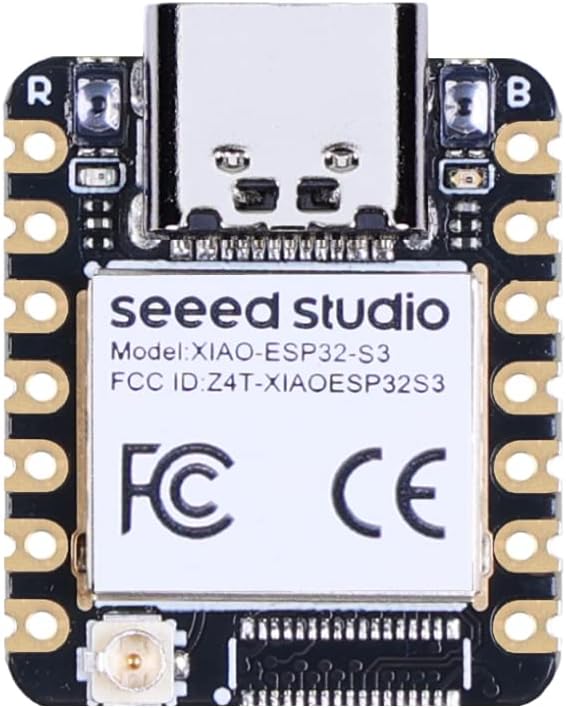
The Seeed Studio XIAO ESP32S3 is designed specifically for space-constrained projects like wearables. Rated 4.7 stars, its thumb-sized design allows for integration into tight spaces without sacrificing performance. It supports the same powerful ESP32-S3 processor as larger boards but in a fraction of the size.
We may earn a commission when you buy through this link, at no additional cost to you.
One of its standout features is the battery charge management capability, which allows for efficient power consumption models including deep sleep. This makes it ideal for devices that need to run for long periods on a single battery charge. The RF performance is also excellent, supporting over 100 meters of communication range.
While the compact size is great, it means there are fewer physical GPIO pins compared to larger boards. This might limit the number of external sensors you can connect directly. However, for wearable tech and small IoT nodes, this trade-off is usually acceptable given the portability gains.
We recommend this board for anyone building fitness trackers, smart rings, or compact robots. The ability to use U.FL antennas for range extension adds significant value. If size and power efficiency are your top priorities, this board delivers exceptional results.
Features four power consumption models allowing for deep sleep mode with usage as low as 14 microamps for extended battery life.
At 21 x 17.5mm, it is one of the smallest boards available, perfect for projects where space is at a premium.
We may earn a commission when you buy through this link, at no additional cost to you.
The Waveshare 3PCS ESP32-S3 Mini Development Board provides excellent value by offering three boards in one package. With a 4.4 rating, users appreciate the affordability and the ability to distribute boards across different projects. It is based on the ESP32-S3FH4R2 chip with a dual-core processor running at 240MHz.
We may earn a commission when you buy through this link, at no additional cost to you.
The module includes 4MB Flash memory and 2MB PSRAM, which is sufficient for many standard IoT tasks. The castellated module design allows for direct soldering onto carrier boards, making it ideal for manufacturing or custom PCB integration. This flexibility is rare in this price range.
Users should note that these modules do not have a built-in USB-C port like the standalone Arduino boards, so you may need a breakout board for easy programming. However, if you are comfortable with soldering, this is a cost-effective way to get multiple ESP32-S3 units.
We suggest this kit for makers building multiple devices or prototyping small units. The independent power supply control helps in reducing energy use efficiently. If you need quantity and low cost without sacrificing core specs, this pack is a smart choice.
Castellated edges allow for direct soldering to PCBs, which is great for embedding into custom hardware designs.
Flexible clock and module power supply settings let you optimize energy usage for battery-operated scenarios.
We may earn a commission when you buy through this link, at no additional cost to you.
This kit is designed for those who want a comprehensive learning experience rather than just a board. Rated 4.3 stars, it comes with over 35 modules including sensors, motors, and displays. This makes it an all-in-one solution for diving into IoT projects with minimal setup.
We may earn a commission when you buy through this link, at no additional cost to you.
The step-by-step online tutorials guide you through 30+ projects with clear circuit diagrams and code. This hands-on approach helps build a solid foundation in electronics and coding. Whether you are a student or a hobbyist, the structured lessons are highly beneficial for beginners.
Because it is a kit, it is bulkier and more expensive than buying just a board. However, the value of the included components and tutorials justifies the cost for many. You get everything needed to start immediately without needing to hunt for extra parts.
We recommend this kit for classrooms or first-time makers. The support team and active online community add extra confidence to your learning journey. If you want to learn practical skills and build real devices, this kit provides everything you need.
Start with basic circuits and progress to advanced IoT applications with clear instructions and code examples provided.
Includes essential modules like OLED screens, servos, and sensors so you do not need to buy extra parts.
We may earn a commission when you buy through this link, at no additional cost to you.
The Arduino Nano 33 IoT focuses on security and connectivity for IoT applications. Rated 4.5 stars, it uses a SAMD21 processor paired with a u-blox NINA-W102 module. This combination ensures reliable communication while keeping data protected through hardware-level encryption.
We may earn a commission when you buy through this link, at no additional cost to you.
Key features include a Secure Element for enhanced privacy and pre-soldered headers for easy breadboard use. It is fully compatible with the Arduino IDE and provides sufficient memory for cloud-based applications. This makes it suitable for projects where security is more critical than raw speed.
While it lacks the raw processing power of the ESP32 series, it excels in stability and security. If you are building smart locks or sensitive home automation, the added encryption is a significant advantage. However, users looking for machine learning features might find it limiting.
We recommend this board for those prioritizing secure connections. Its reliability and ease of use make it a staple in IoT education. If you need a trustworthy device that supports standard Arduino workflows, this is a solid and proven option.
Secure Element provides hardware encryption to protect your data and ensure safe cloud communication.
Integrated WiFi and Bluetooth allow for seamless connection to mobile apps and cloud platforms out of the box.
We may earn a commission when you buy through this link, at no additional cost to you.
The ESP-WROOM-32 is a classic development board that has been widely used in the maker community. Rated 4.4 stars, it offers reliable performance with a dual-core processor and integrated antenna. This board is often the go-to for basic IoT tasks where high-end specs are not strictly required.
We may earn a commission when you buy through this link, at no additional cost to you.
It supports both AP and STA modes for flexible networking, along with Bluetooth 4.2. The compatibility with Arduino IDE makes programming straightforward. With ultra-low power consumption, it is suitable for battery projects that need consistent performance over time.
Users should note that it lacks the newer security features found in the ESP32-S3. However, for simple home automation or sensor monitoring, this is rarely an issue. The cost-effectiveness of the 3-pack option makes it a budget-friendly choice.
We suggest this for students and hobbyists looking for a proven platform. It is easy to source accessories and has extensive community support. If you want a reliable board that just works for standard tasks, this is a great starting point.
Supports AP, STA, and AP+STA modes to let you configure how the board connects to other networks or acts as a hotspot.
Being one of the oldest boards, it has a vast amount of tutorials and code examples available online.
We may earn a commission when you buy through this link, at no additional cost to you.
This set of three boards provides a modern take on the classic ESP-32 with a USB-C port. Rated 4.7 stars, it offers the convenience of USB-C for programming and power delivery. This is a significant upgrade over older micro-USB boards, ensuring a more stable connection.
We may earn a commission when you buy through this link, at no additional cost to you.
It features a CP2102 chip for serial monitoring and supports Over-the-Air updates, which is great for deployed devices. The power-saving modes help extend battery life for sensing applications. These features make it a versatile option for both prototyping and production.
While it uses Bluetooth 4.2, which is older than 5.0, it still handles most tasks well. The main benefit is the combination of the USB-C port and the 3-pack pricing. It offers a sweet spot of convenience and cost without needing complex soldering.
We recommend this for projects needing wireless updates and a modern interface. It is perfect for smart devices that need to stay connected without physical access. If you want easy connectivity at a fair price, this pack is a solid buy.
OTA support allows you to update firmware over Wi-Fi so you do not need to reconnect USB for every revision.
The USB-C port simplifies power and data connection, making it easier to integrate into modern setups.
We may earn a commission when you buy through this link, at no additional cost to you.
The Arduino UNO R4 WiFi is a powerful board that combines the Renesas RA4M1 with an ESP32-S3. Rated 4.7 stars, it features a built-in LED matrix and Qwiic connectors for easy sensor integration. This board is designed for advanced projects requiring display and industrial interfaces.
We may earn a commission when you buy through this link, at no additional cost to you.
It supports CAN bus for real-time communication in industrial settings, making it suitable for robotics and automotive projects. The 12-bit DAC and OP-AMP allow for high-precision analog output. These features offer a high level of control for complex hardware interactions.
The board is larger than the Nano series, which might not fit in space-limited projects. However, the added I/O and display capabilities justify the size for many users. It is an excellent choice for those who need to visualize data directly on the device.
We suggest this board for advanced embedded projects. If you want a display and CAN support out of the box, it is unmatched. For industrial automation or complex robotics, this board provides the tools needed for success.
CAN bus and Qwiic connectors make it easy to connect to vehicles and I2C sensors without complex wiring.
The 12×8 LED matrix allows you to show status messages and feedback directly on the board without extra screens.
We may earn a commission when you buy through this link, at no additional cost to you.
Selecting the right board requires balancing processing needs, connectivity options, and budget constraints.
Consider the CPU speed and architecture. The ESP32-S3 offers a dual-core Xtensa processor running at 240MHz, which is fast enough for most IoT tasks. If you need machine learning capabilities, look for boards with extra PSRAM.
Look for dual-core performance to handle simultaneous tasks efficiently.
Check if the board supports Wi-Fi and Bluetooth. Most modern boards support 5.0, but some older ones may have 4.2. If you need to connect to legacy devices, verify Bluetooth versions match your needs.
Ensure Wi-Fi and Bluetooth support align with your project requirements.
RAM and Flash memory determine how much code and data your project can handle. For simple projects, 4MB Flash is sufficient. For complex apps, look for boards with 16MB Flash or extra PSRAM to store larger assets.
Choose sufficient memory to support your data and code size.
Some boards support MicroPython in addition to C++. If you prefer Python, ensure the board is compatible. Arduino IDE support is standard, but MicroPython adds flexibility for rapid prototyping.
Select a board that supports your preferred coding language.
Battery life is critical for portable projects. Look for deep sleep modes and efficient power management. Boards with battery charging circuits simplify wearable designs significantly.
Prioritize low-power modes for battery-operated devices.
Nano and XIAO boards are perfect for space-limited projects. Larger boards like UNO offer more I/O. Consider where the device will live and choose a size that fits comfortably.
Choose a physical size that matches your project space.
Some boards offer extra features like CAN bus, DAC, or USB-C. If you need specific hardware interfaces, verify they are included. This can save time and cost on external breakout boards.
Check for built-in interfaces to reduce wiring complexity.
Prices vary significantly. Kits offer great value but are bulkier. Single boards are easier to integrate but cost more per unit. Decide how much you can spend per unit for your build.
Balance the cost with the features you need.
Connect your board to a computer using the appropriate USB cable. Ensure you install any necessary drivers and download the Arduino IDE to start programming. Select the correct board port to upload your sketches.
Avoid exposing the board to moisture or excessive heat. Solder connections carefully to prevent damage to the pins. Always disconnect power before adding or removing components to avoid short circuits.
Regularly update your libraries to maintain compatibility with newer features. Keep your code backed up and use version control to track changes. Proper maintenance ensures your board remains functional over time.
Yes, many models in the series like the official Arduino Nano ESP32 support MicroPython. This allows you to write code in Python instead of C++ for faster development. Check your specific board model to confirm compatibility.
The ESP32-S3 is a dual-core Xtensa chip focused on general IoT and AI tasks. The ESP32-P4 is a RISC-V chip with advanced image processing and security features. Both are powerful but target different use cases.
Absolutely. Most boards offer low-power sleep modes to conserve energy. Some even have built-in battery charging circuits. Proper coding can make a single charge last for months depending on usage.
Most boards come without a cable. You will need a USB-C or micro-USB cable depending on the model. Ensure the cable supports data transfer, not just charging, for programming.
Yes, they operate at safe voltages and are designed for indoor environments. Just avoid exposing them to water or high humidity. Use enclosures for sensitive electronics to protect them from dust.
Use the WiFi library in Arduino IDE or MicroPython. Enter your SSID and password in the code. The board will then connect to the network automatically upon boot. Test connection with simple ping tools.
We covered ten boards ranging from budget kits to high-end options with imaging capabilities. The Arduino Nano ESP32 leads as our top pick for its balance of performance and ease of use.
Consider your project needs such as power, space, and security before deciding. Boards with advanced features like MIPI interfaces are great for complex tasks but might be overkill for simple sensors.
Prices and availability can change frequently so always check the latest details on the product page. With the right board, you can build powerful IoT and embedded projects with confidence.