
Yamaha MG10 10-Input Stereo Mixer
4.7Editor score
10-channel standalone mixer design
Discrete class-A D-PRE preamps
3-band EQ and high-pass filters
This guide compares the top analog summing mixers for professional audio production. We evaluate build quality, channel count, and sound characteristics to
Analog summing mixers bring warmth and depth to digital audio workflows. They combine multiple tracks into a cohesive mix using analog circuitry. These units are essential for engineers seeking a classic sound.
We compared ten leading models based on channel count, connectivity, and sonic quality. Our analysis covers budget options to high-end studio consoles. Each product offers unique features for different mixing needs.
Each pick highlights specific strengths like transformer balance or compact design. Prices fluctuate regularly so verify current costs before buying. Use this guide to find the right mixer for your studio.
4.7Editor score

4.9Editor score
5.0Editor score
The following table provides a side-by-side comparison of all ten selected products. It highlights key specifications and features to help you quickly identify the best fit for your studio setup and mixing requirements.




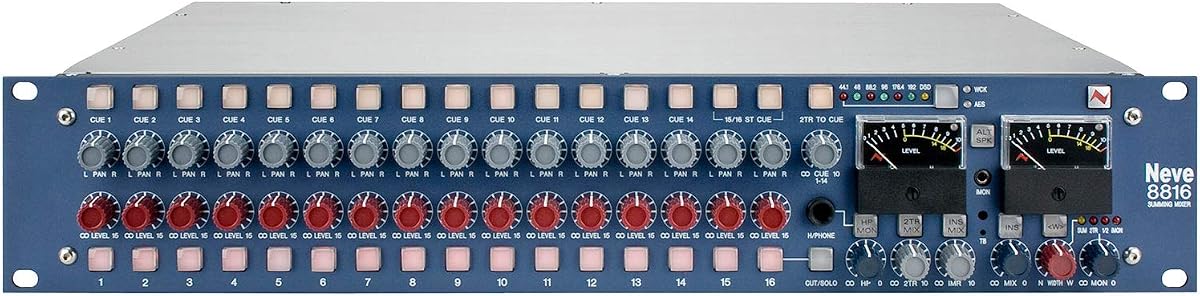
The Neve 8816 stands as the pinnacle of analog summing mixers. With a perfect rating from users it delivers unmatched audio fidelity. This unit combines sixteen channels into a cohesive mix with legendary depth.
We may earn a commission when you buy through this link, at no additional cost to you.
Its transformer-balanced analog mixer design ensures minimal noise and maximum clarity. The monitoring section allows for flexible routing to speakers and headphones. Main and alternate speaker outputs provide versatile monitoring options for studios.
While the price is high it justifies the investment with professional-grade components. The cost reflects the quality of the transformers and circuitry inside. This makes it a long-term asset for serious producers and engineers.
Professional studios seeking the classic Neve sound should choose this model. It elevates digital mixes with analog warmth and glue. For those ready to invest in top-tier gear this is the definitive choice.
The transformers impart a rich harmonic structure that digital plugins often miss.
Dual headphone outputs and speaker options make collaboration easy in the studio.
We may earn a commission when you buy through this link, at no additional cost to you.
The Yamaha MG10 is a solid choice for beginners and small setups. It offers ten inputs with high-quality class-A D-PRE preamps. Users praise its natural sound and durable construction at a low cost.
We may earn a commission when you buy through this link, at no additional cost to you.
Its D-PRE preamps deliver fat bass and smooth highs with minimal noise. The 1-knob compressors make it easy to control dynamics without complex settings. A rugged metal chassis ensures it lasts through touring or heavy studio use.
The lack of USB or effects limits its use for digital recording directly. You will need an external interface for computer connection. However this keeps the price low and the signal path pure for analog mixing.
This mixer is perfect for podcasters or small live bands on a budget. It provides professional sound quality without breaking the bank. If you need a simple reliable analog mixer this is an excellent starting point.
The class-A D-PRE circuit delivers studio-grade gain for microphones and instruments.
Its small footprint fits easily on crowded desks or portable setups.
We may earn a commission when you buy through this link, at no additional cost to you.
The Mackie 1202VLZ4 delivers exceptional sound for its compact size. It features twelve channels including four Onyx mic preamps known for low noise. This makes it ideal for broadcast and live sound applications.
We may earn a commission when you buy through this link, at no additional cost to you.
Its dynamic range of 128.5dB ensures clean audio even at high levels. Distortion remains below 0.0007% across the frequency spectrum. The three-band EQ and 75Hz low-cut filter help shape sound effectively on every channel.
While it lacks USB connectivity it excels at analog routing and monitoring. You can use aux sends for external effects or headphones. This focus on analog purity is perfect for setups that already have digital interfaces.
Anyone needing a reliable workhorse for multiple inputs should consider this unit. It balances cost and performance better than most competitors in its class. For home studios or small venues it is a top recommendation.
Enhanced RF rejection and low distortion make it suitable for radio and streaming.
Multiple aux sends and stereo buses offer creative monitoring and mixing options.
We may earn a commission when you buy through this link, at no additional cost to you.
The Mackie Onyx Series combines analog warmth with digital convenience. It offers sixteen channels with legendary Onyx preamps and USB connectivity. This allows direct recording to a computer without an external interface.
We may earn a commission when you buy through this link, at no additional cost to you.
Its high-resolution 96kHz recording capability captures every detail of your performance. Bluetooth streaming lets you play backing tracks directly into a channel strip. A robust digital effect engine adds reverb and delay without external gear.
Some users note that driver setup can be tricky on newer operating systems. The unit is also heavier than purely analog mixers due to internal electronics. These factors are minor compared to the recording flexibility it provides.
For home producers wanting one-box recording this mixer is a strong candidate. It simplifies the signal chain while maintaining high-quality analog tones. If you need multi-track recording in a mixer this is highly recommended.
Combine mixing and recording without needing a separate audio interface.
Bluetooth streaming allows easy playback from phones or tablets.
We may earn a commission when you buy through this link, at no additional cost to you.
The Allen & Heath Xone:43 is a staple for professional DJs seeking analog warmth. It features four stereo channels plus a mono channel for microphones. The sound quality is rich and smooth for club environments.
We may earn a commission when you buy through this link, at no additional cost to you.
Its Xone Voltage Controlled Filter system provides deep control over frequency ranges. Resonance and frequency controls allow creative sound shaping during mixes. Send and return connections let you integrate external FX units easily.
While it is designed for DJing it lacks USB recording capabilities. The focus is purely on live performance and tactile control. For club play this is a non-issue but limits studio utility.
DJs prioritizing sound quality and filter performance will love this unit. It stands out with its unique sonic signature compared to digital mixers. If you play live often and value tone this is a top choice.
The unique filter sweeps add musicality and texture to transitions.
Innofader compatibility makes it ideal for turntablists and battle DJs.
We may earn a commission when you buy through this link, at no additional cost to you.
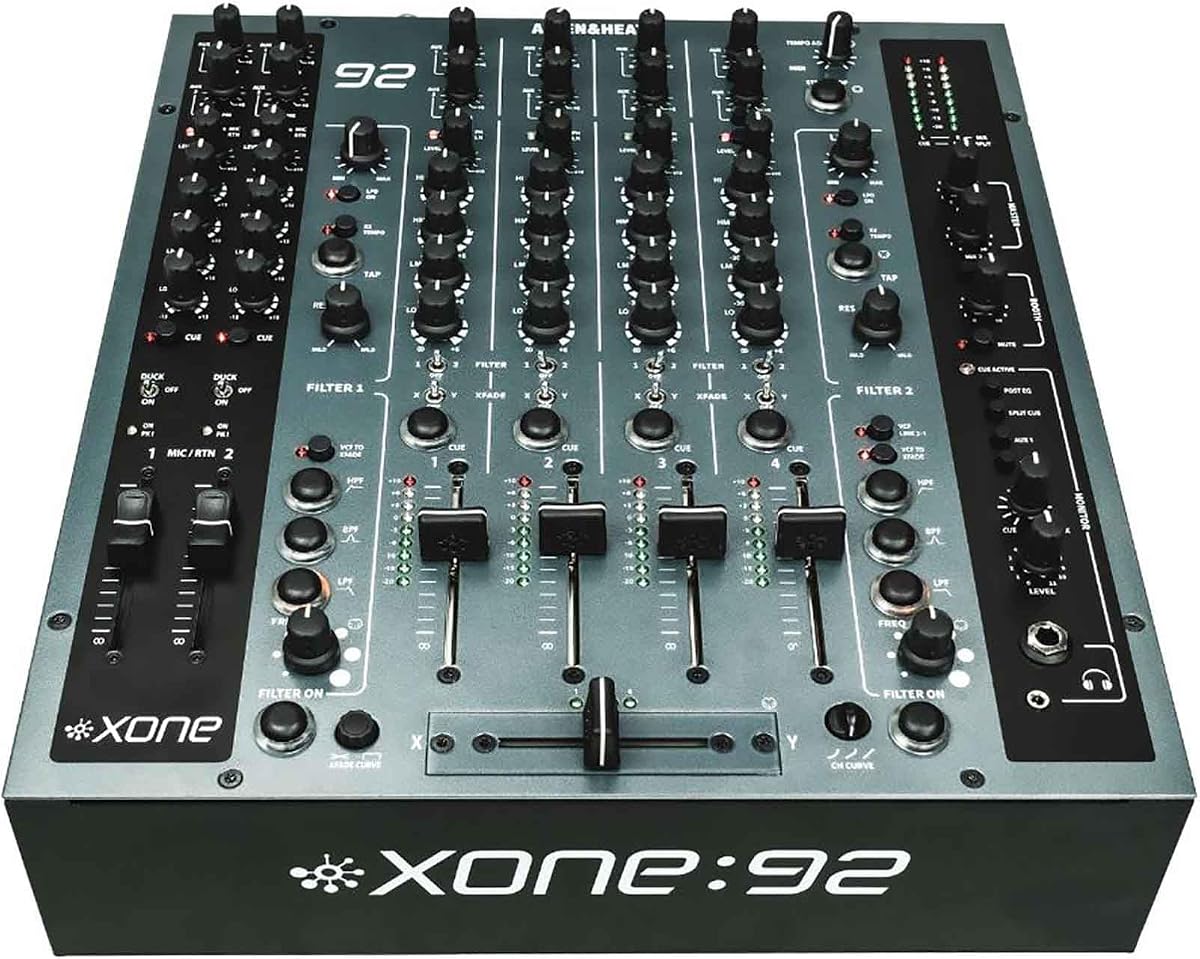
The Allen & Heath Xone:92 Mk2 is a premium choice for professional DJs. It offers four channels with advanced VCF switching for creative control. The build quality is robust enough for touring and heavy nightly use.
We may earn a commission when you buy through this link, at no additional cost to you.
With two multimode filters and stereo aux inputs it offers more than standard mixers. Send and return connections support external FX processing seamlessly. The design prioritizes signal integrity and tactile control on the floor.
The price is high compared to entry-level mixers but justified by features. It lacks recording capabilities focusing instead on performance reliability. For serious DJs the sound quality is worth the extra cost.
If you need a top-tier mixer for club gigs this model fits perfectly. It delivers the classic Xone sound with modern improvements. For pros who demand the best sound and feel this is the standard.
Switchable filter types allow unique tonal changes during live performances.
Stereo aux inputs provide extra connectivity for backing tracks or samples.
We may earn a commission when you buy through this link, at no additional cost to you.
The Headliner R4 brings a classic rotary feel to modern DJ setups. It features four stereo channels with analog filter controls on each. The design emphasizes smooth transitions and warm sound through high-quality components.
We may earn a commission when you buy through this link, at no additional cost to you.
Genuine ALPS potentiometers ensure precise control over volume and EQ. Independent master and booth outputs with balanced XLR connectors support professional sound systems. Stained wood panels give it a vintage aesthetic that looks great on stage.
Rotary faders take time to learn if you are used to crossfaders. The unit is also heavy which may not suit mobile DJs. However for fixed installations the sound and build are exceptional.
Club owners and residents looking for a premium analog mixer will appreciate this. It offers a unique workflow that encourages musical mixing. If you prefer knobs over faders this is an excellent investment.
Dedicated filters allow detailed frequency control without external gear.
Metal enclosure and quality pots ensure durability in demanding environments.
We may earn a commission when you buy through this link, at no additional cost to you.
The Rupert Neve Designs 5059 is a compact satellite unit for serious studios. It provides sixteen inputs summed through authentic Shelford Edition transformers. This brings legendary coloration to your digital mixes in a small box.
We may earn a commission when you buy through this link, at no additional cost to you.
Its analog summing capabilities combine tracks into a cohesive stereo bus easily. The build quality matches the larger consoles with high-end parts throughout. It is designed to integrate with existing DAW setups for hybrid workflows.
This unit requires careful setup and might need rack space or mounting. The price is steep for those without other Neve gear already. But for sound quality fans the investment pays off in sonic richness.
Engineers wanting to add Neve character to a digital workflow should choose this. It offers the best of both worlds in a compact form. If you crave that classic sound this satellite is a top tier choice.
Designed to work seamlessly with other Neve preamps and processors.
Delivers big console sound in a space-saving design.
We may earn a commission when you buy through this link, at no additional cost to you.
The SSL BiG SiX is a premium hybrid console for high-end studios. It brings SuperAnalogue preamps and a stereo bus compressor to the table. This allows analog processing before digital conversion for superior audio quality.
We may earn a commission when you buy through this link, at no additional cost to you.
Its 16-channel USB interface connects directly to Mac or PC systems. Comprehensive monitoring and 18-input summing provide flexibility for complex sessions. 24-bit 96kHz converters ensure transparent signal conversion without coloration.
The cost is very high compared to simpler mixers. It also requires a dedicated setup that might overwhelm small rooms. But for professional results the features and build are unmatched in this category.
Studios needing a complete mixing and recording solution should consider this unit. It replaces multiple pieces of gear with one powerful console. If budget allows for top-tier gear this is the ultimate choice.
Built-in stereo master bus compressor glues tracks together naturally.
Proprietary circuit design delivers pristine preamp performance.
We may earn a commission when you buy through this link, at no additional cost to you.
The Radial Mix 2:1 is a simple passive mixer for summing tracks. It combines two inputs into a mono output without requiring power. This makes it a convenient tool for basic routing in tight spaces.
We may earn a commission when you buy through this link, at no additional cost to you.
Its passive design ensures reliability with no internal components to fail. The compact build fits easily on racks or desktops for quick signal changes. It maintains signal integrity with transparent sound and minimal noise.
With only two channels it is not a full mixing console. It lacks gain controls and relies on source levels. This limits its use to specific summing tasks rather than full production.
For occasional summing or routing needs this unit is highly practical. It is affordable and requires no additional power cables. If you need a simple signal combiner this is a reliable choice.
No electronics mean fewer points of failure over time.
Ideal for combining two specific tracks without adding noise.
We may earn a commission when you buy through this link, at no additional cost to you.
Selecting the right analog summing mixer requires understanding your specific workflow needs. This section details key factors to consider before making your purchase decision.
Channel count determines how many tracks you can sum simultaneously. If you work with large sessions choose a unit with enough inputs to accommodate your projects without splitting stems.
Look for at least sixteen channels for full mixes or use multiple units for smaller workflows.
Transformers add warmth and saturation to audio signals. High-quality transformers reduce noise and provide a rich harmonic structure. Many top units feature transformer-balanced inputs and outputs.
Prioritize models with custom or discrete transformers for the best analog character.
Ensure the mixer supports your studio interfaces such as XLR or RCA. Balanced connections are crucial for reducing interference over long cable runs. Check for headphone and monitor outputs.
Select a unit with versatile outputs to fit your existing studio rack setup.
Analog summing mixers range from affordable to very expensive. Define your budget early to narrow down options that offer value. Higher cost usually means better components and sound quality.
Balance your financial limits with the sonic improvements you need for your genre.
Professional gear should be built to last in demanding environments. Look for metal chassis and high-quality potentiometers that can withstand frequent use. Sturdy construction protects internal components.
Choose a mixer with a robust frame and reliable controls for longevity.
Consider how the mixer fits with your current digital audio workstation. Some units offer USB or digital links for seamless integration. Others require external routing and manual patching.
Ensure compatibility with your DAW or recording interface for a smooth workflow.
Different brands impart unique sonic qualities to your mixes. Some favor clean transparency while others add saturation and grit. Research specific models for their tonal traits before buying.
Listen to comparisons to confirm the sound matches your artistic vision.
Space in a studio is often limited. Check the physical dimensions to ensure the unit fits on your desk or rack. Compact models are available but might offer fewer channels.
Measure your workspace to avoid buying equipment that is too large for your room.
Begin by connecting your audio interface outputs to the mixer inputs using balanced cables. Ensure levels are set correctly to prevent clipping before the summing stage. Use headphones to check levels before routing to speakers.
To achieve optimal sound adjust EQ and gain settings gradually on each channel. Monitor the master output levels to ensure headroom is maintained throughout the mix. Use mute or solo functions to isolate specific issues.
Keep your mixer in a dry environment away from dust and humidity. Regularly clean knobs and faders with appropriate electronic cleaners. Check connections periodically to ensure all signals pass without interference or noise.
Analog summing mixers combine digital tracks using analog circuitry to add warmth and depth. This process can make a digital mix sound more cohesive and natural. Many engineers find it provides a better stereo image than summing in software.
Yes you typically need an interface with enough outputs to match the mixer inputs. The interface sends stems from your DAW to the mixer. Some mixers have built-in interfaces which simplifies the setup.
A passive mixer sums signals without active electronics or power supplies. They are simpler and more reliable but do not provide gain or EQ. These are often used for basic routing or summing in small setups.
Prices vary widely from affordable models to high-end professional units. Basic passive mixers cost much less than active consoles with transformers. Your budget will dictate the features and sound quality you can expect.
While some are designed for live DJing most summing mixers are studio focused. Live environments require different routing and durability features. Always check the manual for specific application support.
Yes you need XLR or TRS cables to connect interfaces and monitors. Using balanced cables reduces noise and interference effectively. Verify the length needed for your studio layout before purchasing.
Top brands like Neve and SSL offer legendary sound quality. For budget options Yamaha and Mackie provide reliable performance. The best choice depends on your specific sonic preferences and budget.
Start with all faders down and bring up signals slowly. Watch meters to keep peaks in a safe range. Ensure the master output does not clip while summing multiple tracks.
We have reviewed ten top analog summing mixers for different needs and budgets. The Neve 8816 stands out for premium sound while the Yamaha MG10 offers great value. Each unit brings unique features to your studio workflow.
Prioritize factors like channel count and transformer quality when making your choice. The best mixer is the one that fits your specific sound goals and room. Don't overlook compatibility with your existing gear.
Always check current prices and availability before placing your order. Prices fluctuate regularly and deals change quickly. Use this guide to make an informed decision that enhances your production.