
Subao AAC Device for Autism
4.6Editor score
20 common voice commands
Ergonomic portable design
5 adjustable volume levels
This guide compares the top 10 AAC devices for autism non verbal communication, evaluating features like buttons, voice options, and portability for effective
Finding the right Acc Device for Autism Non Verbal Communication is crucial for individuals who struggle with traditional speech. These tools empower users to express needs, feelings, and daily messages effectively. A good device offers intuitive buttons, clear voice output, and customizable options to suit unique communication challenges and personal preferences.
Our team evaluated ten leading AAC devices based on user feedback, feature sets, and practical usability in real-world scenarios. We looked at button count, voice personalization, volume control, and portability to ensure the selected products meet diverse needs for children and adults alike across various environments.
Each pick in this list highlights specific strengths such as ease of use, durability, and specialized features for therapy or daily life. While prices may change over time, these models represent strong value and performance. Always check current listings for the most up-to-date availability and shipping details before purchasing.
4.6Editor score
4.4Editor score

4.4Editor score
This side-by-side comparison highlights key specifications for each of the ten featured devices. Use it to quickly identify which model offers the specific buttons, voice options, and build quality that align with your communication goals and budget constraints.


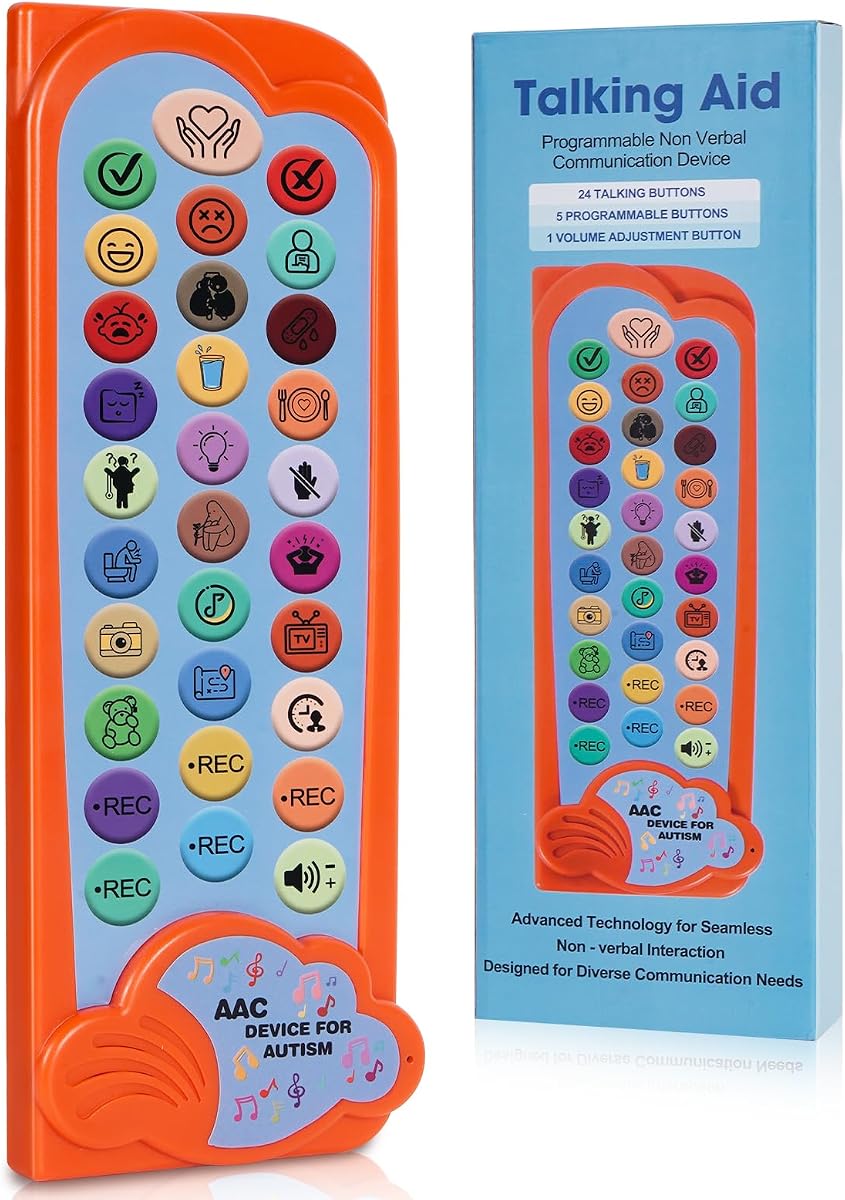

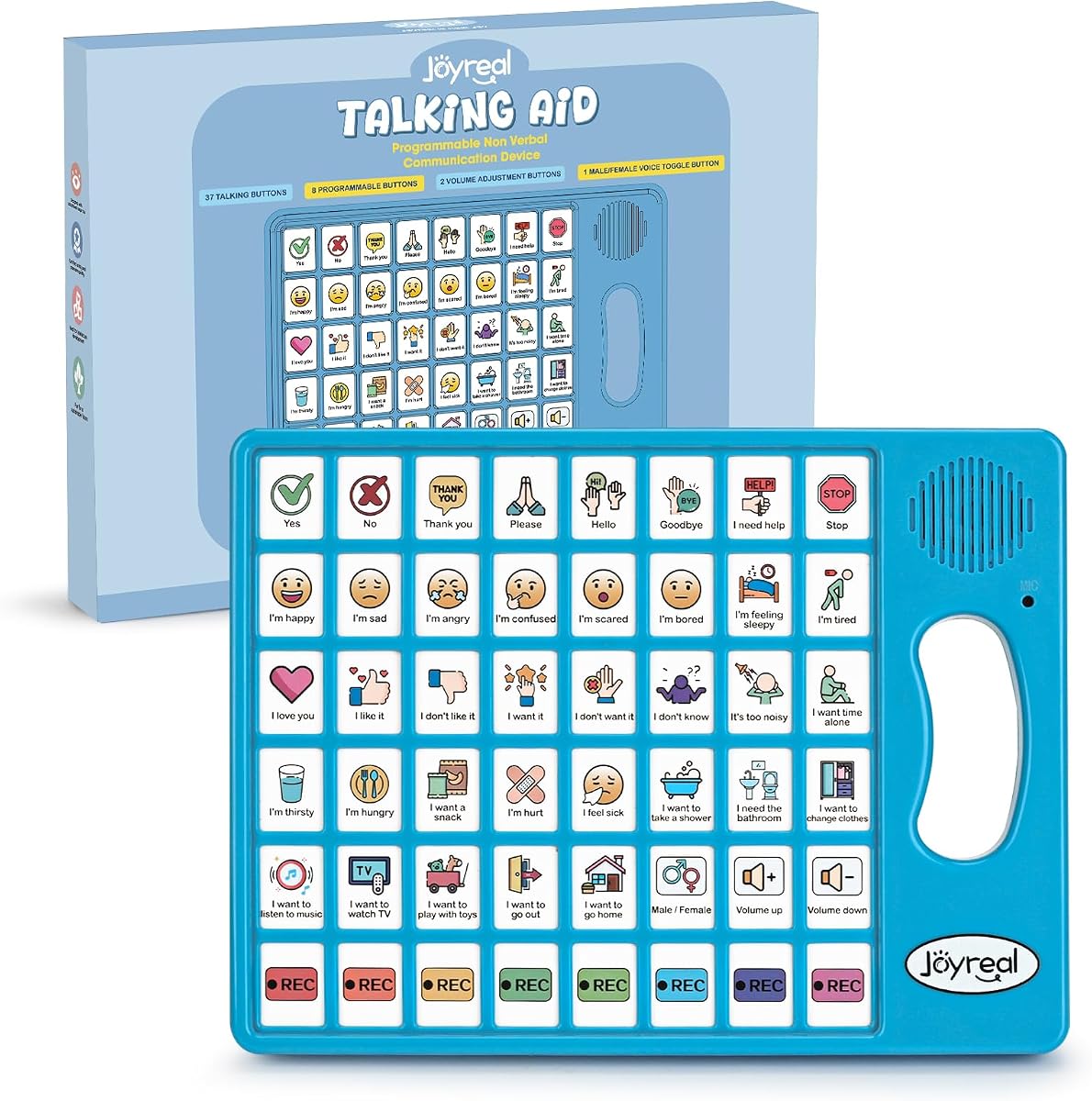
The Joyreal AAC Device stands out with 37 pre-installed buttons covering essential needs like yes, no, and thirsty. Rated 4.4 stars, it offers a balance of features and usability for children and adults. Its male and female voice switch adds a personalized touch for communication.
We may earn a commission when you buy through this link, at no additional cost to you.
Eight programmable buttons allow caregivers to record tailored messages using their own voice, which helps build familiarity and confidence. The adjustable volume ensures clarity in noisy environments. The device comes with a storage bag, making it easy to transport to therapy or school.
While it requires three AAA batteries, the volume control compensates for varying acoustic settings. The interface is straightforward, minimizing the learning curve for new users. Some may find the plastic build basic, but it prioritizes function over form.
This device is ideal for those seeking a comprehensive starter AAC solution. It reduces frustration by enabling quick expression of needs. We recommend it for home use and therapy sessions where clear, reliable communication is paramount.
Record custom phrases on eight buttons to match the user's comfort level and familiar voices.
Lightweight build and included bag make it easy to carry anywhere for spontaneous communication.
We may earn a commission when you buy through this link, at no additional cost to you.
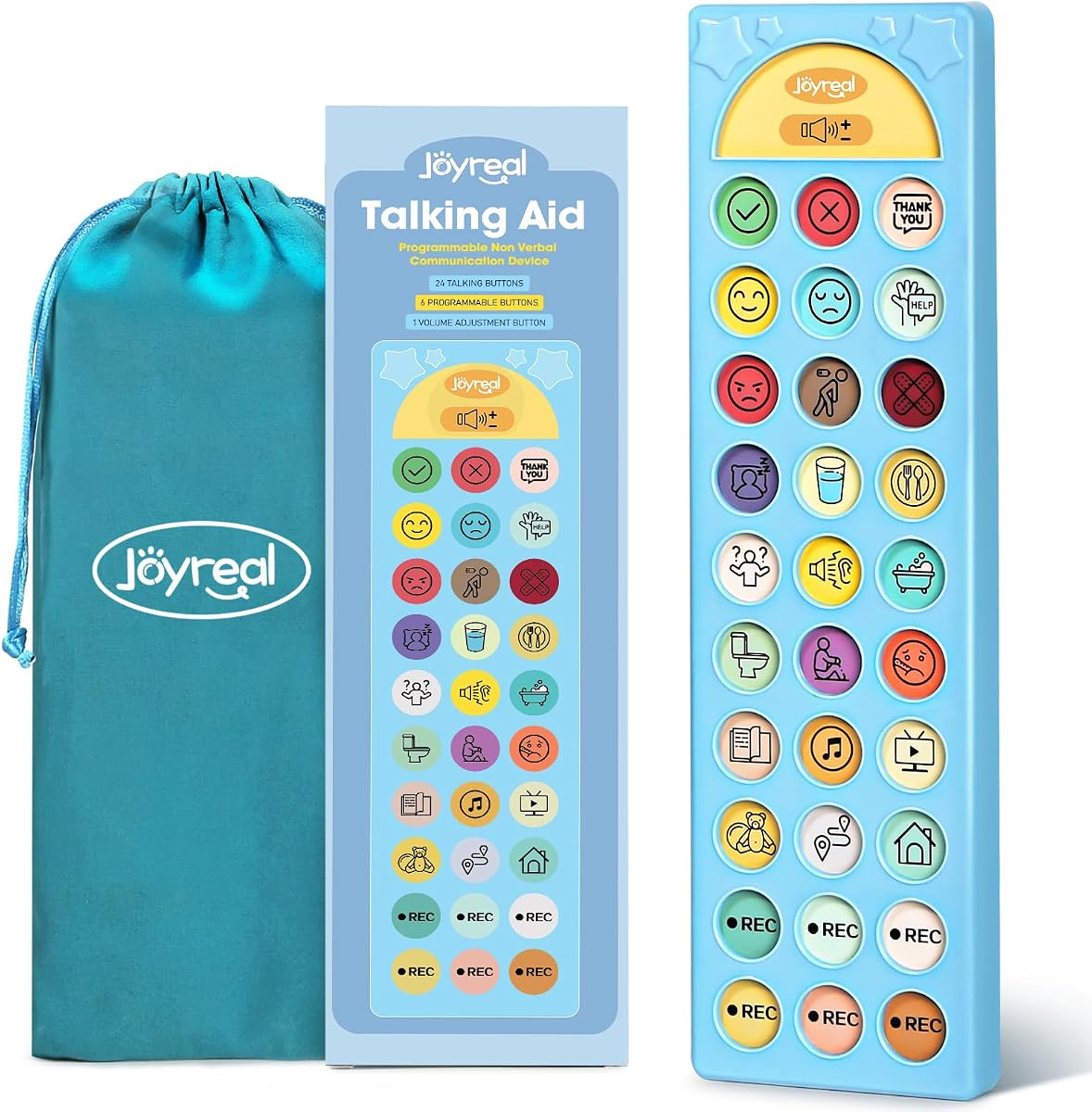
This Joyreal model offers a cost-effective entry into AAC tools with 24 pre-installed buttons. It matches the features of the higher rank model but focuses on essential needs. The 4.4 rating reflects consistent performance across user feedback.
We may earn a commission when you buy through this link, at no additional cost to you.
Six programmable buttons provide flexibility for personalization. The male and female voice switch allows for diverse communication experiences. Volume control helps in different settings. It is ideal for those needing a portable option without breaking the budget.
Users might miss having more buttons, but 24 covers most daily interactions. The device is lightweight and includes a travel bag. It is best suited for home use or short therapy sessions where simplicity is key.
We recommend this for families starting their AAC journey. It provides reliable communication without overwhelming complexity. The value proposition is strong for caregivers needing an immediate solution.
Offers key features like programmable buttons at a lower cost point.
Focuses on essential needs to reduce confusion for first-time users.
We may earn a commission when you buy through this link, at no additional cost to you.
This device is designed to equip children with quick, self-initiating communication skills. It features 40 pre-installed phrases and four modules like Basic Expressions and Feelings. The 4.4 rating highlights its effectiveness for building sentence structures.
We may earn a commission when you buy through this link, at no additional cost to you.
The communication guide and icon meaning guide help users find words accurately. Five programmable buttons allow for custom messages. Adjustable volume levels ensure clarity. The editable stickers prevent forgetting recorded messages.
It is bulkier than handhelds but offers more educational value. The structured modules support therapy goals. Users should have access to batteries. It is a strong choice for school or clinical settings.
We recommend this for those needing a guided approach to communication. The design supports skill building over time. It balances ease of use with robust functionality for nonverbal individuals.
Guides users from simple commands to sentence structures through modules.
Color and picture format icons help users understand commands quickly.
We may earn a commission when you buy through this link, at no additional cost to you.
The Subao device holds a 4.6 rating for its ergonomic design. It fits comfortably in small hands with large raised buttons for easy pressing. It includes 20 common voice commands and four recording keys.
We may earn a commission when you buy through this link, at no additional cost to you.
Its phone-sized structure makes it ideal for backpacks. The lanyard hole allows wrist attachment. Textured areas on sides provide comfort. Five volume levels help adapt to environments. It reduces risk of loss.
The smaller button count may limit complex expression. However, the design excels for motor accessibility. It is a reliable option for on-the-go communication needs where simplicity is preferred.
We suggest this for users prioritizing ease of grip. The build quality is durable against bumps. It serves well for daily needs and therapy exercises.
Raised buttons make pressing easier for users with limited motor skills.
Lanyard helps keep the device secure during active play or travel.
We may earn a commission when you buy through this link, at no additional cost to you.
Brightway offers 60 total buttons for more freedom to communicate. It includes 10 programmable buttons for custom messages. The male/female voice switch adds customization. Large buttons are responsive and require minimal pressure.
We may earn a commission when you buy through this link, at no additional cost to you.
It is designed for quick learning without complicated setup. The volume adjusts to different environments. Users report it is comfortable for seniors and kids. The lightweight design aids daily portability.
The 3.9 rating suggests mixed feedback. Some may find the build basic. However, the button count is a major benefit. It is a solid choice for those needing extensive options.
We recommend it for users who need a wide range of phrases. The simplicity helps beginners. Check reviews for long-term durability insights before purchasing.
60 buttons provide more phrases than typical starter devices.
Requires minimal pressure to activate, helping those with limited hand strength.
We may earn a commission when you buy through this link, at no additional cost to you.
This device is small and lightweight, ideal for carrying anywhere. It features 14 pre-installed instructions and two programmable buttons. The 4.3 rating reflects satisfaction with its basic functionality.
We may earn a commission when you buy through this link, at no additional cost to you.
It helps express essential needs like yes, no, and thirsty. The design is simple to use. It is suitable for nonverbal children and adults. The voice is easy to understand.
While it lacks extensive buttons, it serves well for core needs. The portability is a strong point. It is a good entry point for those testing AAC usage.
We suggest this for temporary or trial use. It provides autonomy without complex features. Check if extra buttons are needed for daily routines.
Small size makes it easy to fit in pockets or small bags.
Ready to use immediately with minimal configuration.
We may earn a commission when you buy through this link, at no additional cost to you.
The Talker Buddy Cloud features a soft touch layout for easy pressing. It comes with pre-installed vocabulary and a stylish travel bag. The 4.5 rating indicates high user satisfaction.
We may earn a commission when you buy through this link, at no additional cost to you.
It is versatile for professionals and caregivers. The layout minimizes learning curves. It suits those with autism, stroke, or special needs. The bag makes packing convenient.
Recording is not listed as a feature. However, it is reliable for standard phrases. It is a good option for caregivers needing a simple tool.
We recommend this for users who prioritize tactile ease. It is effective for home and school. Ensure it matches specific communication goals before buying.
Soft buttons reduce finger strain during repeated use.
Travel bag helps keep the device clean and organized.
We may earn a commission when you buy through this link, at no additional cost to you.
This Joyreal device offers 23 pre-installed buttons and six programmable ones. It includes a male/female voice switch. The 4.4 rating shows reliable performance for daily needs.
We may earn a commission when you buy through this link, at no additional cost to you.
Volume adjustment ensures clear sound. It is lightweight and has a storage bag. It is suitable for stroke patients or anyone with speech difficulties. The design reduces anxiety.
It is a standard AAC toy with essential features. Some may find the plastic basic. It is a practical alternative to cards. The storage bag aids organization.
We suggest this for those needing a balance of features. It supports confidence building. Check if six custom buttons meet your recording needs.
Combines essential buttons with custom recording options effectively.
Storage bag keeps the device secure when not in use.
We may earn a commission when you buy through this link, at no additional cost to you.
This device is lighter than a smartphone, making it highly portable. It has 24 pre-loaded buttons and five custom voice buttons. The 4.4 rating reflects its utility for daily routines.
We may earn a commission when you buy through this link, at no additional cost to you.
Volume levels adapt to environments. It aids stroke patients and autism users. The design reduces frustration. Pictorial cues encourage social interaction.
It is a practical upgrade to cards. Users should keep batteries handy. It is best for on-the-go communication. It is a solid entry-level option.
We recommend this for those needing a small device. It supports independence. Check if five custom buttons fit your needs.
Lighter than a smartphone for easy transport.
Pictorial cues help users express feelings and needs.
We may earn a commission when you buy through this link, at no additional cost to you.
The Talker Pro features a soft touch layout and pre-programmed commands. It comes with a travel bag for convenience. The 4.4 rating suggests it is effective for various needs.
We may earn a commission when you buy through this link, at no additional cost to you.
It suits those with autism or stroke. Parents can use it at home or school. The lightweight design aids transport. It simplifies communication for non-verbal kids.
It lacks recording features but covers basics well. The layout minimizes learning curves. It is a reliable tool for caregivers. Ensure it aligns with therapy goals.
We recommend this for families needing a quick solution. It is sturdy and easy to pack. It provides essential phrases without complexity.
Includes a stylish bag for easy packing and transport.
Soft touch buttons make interaction comfortable for all ages.
We may earn a commission when you buy through this link, at no additional cost to you.
Selecting the right AAC device requires evaluating button counts, customization options, and build quality to match user needs.
Devices range from 14 to 60 buttons. More buttons allow for more phrases but may overwhelm users. Choose a layout that is easy to see and press.
Opt for a device with enough buttons to cover daily needs without clutter.
Programmable buttons let caregivers record personalized messages. This familiarity helps users connect with the device and express unique needs effectively.
Look for at least five to ten programmable buttons for flexibility.
Adjustable volume ensures clarity in noisy environments like schools. It helps users hear messages clearly without disrupting surroundings.
Choose a device with multiple volume levels for versatility.
Lightweight devices are essential for on-the-go use. Look for storage bags or lanyards to prevent loss and carry the device easily.
Prioritize models that fit comfortably in a backpack or small bag.
A simple layout reduces the learning curve. Soft touch or raised buttons can help users with motor difficulties interact with the device comfortably.
Select a device with intuitive buttons and clear icons.
The device should withstand regular use. Check for durable materials and protective cases. Ensure it can handle bumps during therapy or travel.
Prioritize sturdy construction for long-term reliability.
Most devices use batteries. Ensure you have access to the correct battery type. Some models may have battery indicators to avoid interruptions.
Plan for battery replacements to keep the device functional.
Choose a device that matches the user's cognitive and physical skills. Ensure the interface is simple enough for quick adoption.
Test the device with the user before finalizing the purchase.
Begin by inserting fresh batteries and powering on the device. Press the buttons to hear pre-installed phrases. Familiarize the user with common buttons for essential needs like thirsty or yes.
If available, record custom messages on programmable buttons. Use clear and familiar voices to help the user recognize the commands. Ensure volume is set appropriately for the environment.
Clean the device regularly with a dry cloth. Store it in the provided bag to prevent damage. Replace batteries promptly to maintain consistent performance.
An Acc Device for Autism is a tool designed to support nonverbal individuals in communicating needs and feelings. It uses buttons and voice output to help users express themselves effectively.
Most devices have a record button. Hold it down, speak your phrase, and release. Check the manual for specific steps. This allows customization with familiar voices.
Yes, many models are designed for both children and adults. They support communication needs across ages. Look for larger buttons or adjustable volumes for adult users.
No, most AAC devices work offline using internal recordings. This makes them reliable in areas without connectivity. Ensure batteries are charged before use.
Battery life varies by usage. Expect several hours of active use per charge. Keep spare batteries on hand for continuous communication during the day.
Yes, many users with stroke recovery find these tools helpful. They aid in relearning communication or expressing needs during rehabilitation. Check with a therapist for guidance.
Use a soft, dry cloth to wipe the buttons. Avoid using liquids that could damage electronics. Regular cleaning ensures hygiene and longevity of the device.
Many models are used in therapy settings. They support speech therapy goals. Consult with a professional to ensure the device meets specific needs.
This guide presented ten top Acc devices for Autism Non Verbal Communication. Each model offers unique features like programmable buttons and volume control to suit different needs.
Prioritize devices that match the user's daily routine and environment. Ensure the layout is simple and the voice output is clear for maximum effectiveness.
Always check current prices and availability before purchasing. These prices may change but the value of reliable communication remains constant.