
Light Meter Digital Illuminance Meter
4.4Editor score
0 to 200000 Lux range
4 digit color LCD screen
Measures ambient temperature
Lightweight compact design
This comprehensive guide compares the top analog light meters for photographers and cinematographers, evaluating accuracy, build quality, and essential
Choosing the right exposure tool is critical for capturing perfectly lit images in any environment. An analog light meter offers reliable, battery-free operation that professionals trust for consistency across varied shooting conditions without electronic failure.
We evaluated ten top models based on accuracy, build durability, and ease of use. Our comparison includes classic incident meters alongside modern digital hybrids to ensure you find the best fit for your specific photography or film needs.
Each pick highlights key strengths and ideal use cases to streamline your decision process. Note that pricing and availability fluctuate frequently, so verify current listings before purchasing to ensure you secure the best value today.
4.4Editor score

4.6Editor score
5.0Editor score
This detailed comparison table outlines the core specifications of each model to help you quickly identify the device that matches your technical requirements and budget constraints.
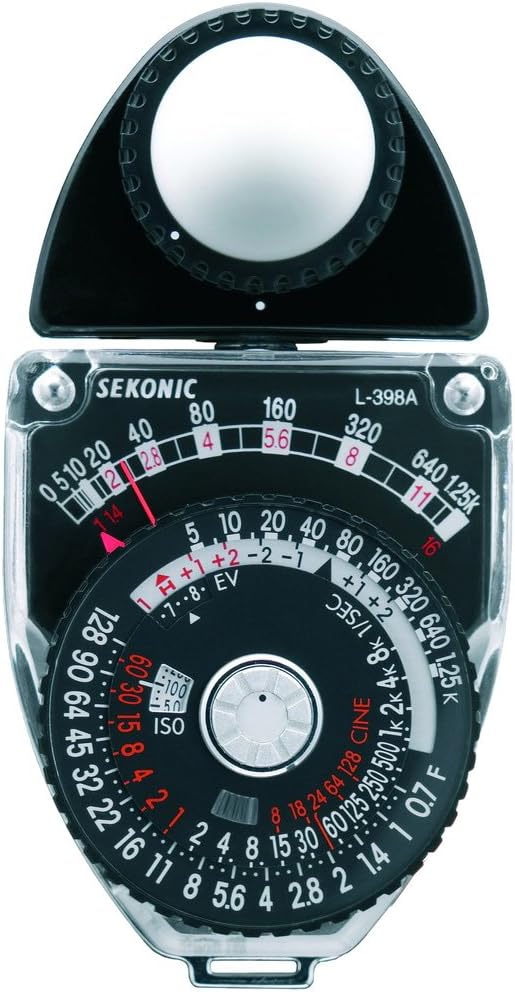


The Sekonic L-398A Studio Deluxe III stands out as the definitive choice for photographers seeking a reliable analog tool. With a rating of 4.6 stars, it delivers consistent incident and reflected readings without relying on batteries, ensuring you never miss a shot due to power failure.
We may earn a commission when you buy through this link, at no additional cost to you.
Its integrated amorphous photocell generates power from ambient light, a feature that guarantees dependable exposure readings in any studio or location environment. The full dial readout provides instant display of aperture and shutter speed combinations, allowing for rapid adjustments without navigating electronic menus.
While the analog interface may lack the precision of digital displays, the trade-off is worth it for workflow efficiency. The swivel head design ensures you can maintain a clear view of the display while positioning the incident dome accurately on complex subject geometries.
This meter is ideal for professionals who prioritize durability and timeless workflow over modern digital convenience. It remains the best option for cinematographers and studio photographers who value a tool that performs consistently day after day without battery anxiety.
The amorphous photocell ensures the meter functions indefinitely without needing battery replacements or charging cycles.
The analog dial allows you to read settings instantly without pausing to interact with digital menus.
We may earn a commission when you buy through this link, at no additional cost to you.
This handheld digital illuminance meter offers an accessible entry point for hobbyists and casual users needing accurate light data. With a rating of 4.4 stars, it measures luminosity from 0 to 200,000 Lux, making it suitable for a wide variety of home and office environments.
We may earn a commission when you buy through this link, at no additional cost to you.
The device features a high-accuracy sensor that delivers readings within 3 percent deviation for lower light levels. Its 4-digit color LCD screen provides clear visibility of MIN/Max readings and data hold functions, ensuring you capture peak lighting moments effectively.
Although it lacks the sophisticated features of professional cinematography meters, its ability to measure ambient temperature adds extra value for general HVAC or safety inspections. The compact and lightweight design ensures it fits easily into any pocket or bag.
This model is perfect for users who need reliable general-purpose light measurements without a significant investment. It is an excellent choice for checking workspace lighting, plant growing environments, or ensuring safe visibility levels in various settings.
Capable of measuring up to 200,000 Lux, it covers nearly all common lighting conditions found in indoor and outdoor spaces.
At a fraction of the cost of professional gear, it delivers sufficient accuracy for general tasks and educational purposes.
We may earn a commission when you buy through this link, at no additional cost to you.
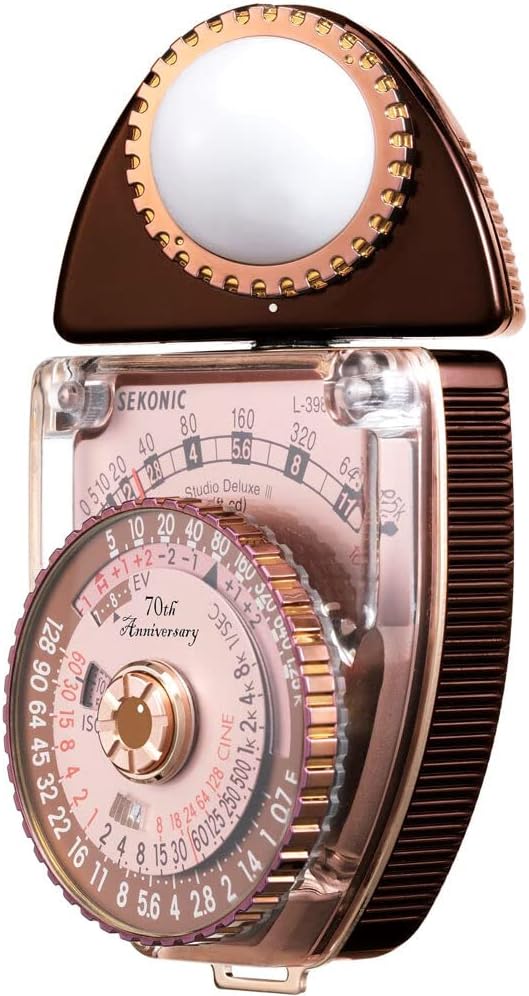
The Sekonic Studio Deluxe III 70th Anniversary edition represents the pinnacle of analog light meter engineering. With a perfect 5.0 star rating, it offers instant reading of a full range of aperture and shutter combinations, celebrated by professionals worldwide for its precision and reliability.
We may earn a commission when you buy through this link, at no additional cost to you.
This special edition honors decades of innovation with enhanced build quality and a timeless design that appeals to both working professionals and collectors. The analog calculator dial remains a favorite for its ability to provide clear visual feedback without relying on fragile electronics or battery sources.
While it shares core functionality with other models in the line, the anniversary edition is crafted to meet the highest standards of durability and performance. Its compact and durable construction ensures it withstands the rigors of daily studio use and field shoots alike.
This meter is recommended for professionals who demand the best tool available and appreciate the heritage of analog measurement technology. It serves as a reliable companion for high-end photography and cinematography where exposure accuracy cannot be compromised by battery life or digital failure.
Honoring 70 years of excellence, this edition combines classic aesthetics with proven mechanical reliability.
Designed for demanding environments, it delivers consistent results that high-end production teams depend on.
We may earn a commission when you buy through this link, at no additional cost to you.
The MT-92H Light Meter distinguishes itself with an innovative split-sensor design that allows for simultaneous measurement and monitoring. It delivers highly accurate readings from 0 to 200,000 Lux with a rapid 0.5-second refresh rate, capturing even subtle light changes efficiently.
We may earn a commission when you buy through this link, at no additional cost to you.
Its split-sensor technology enables a separate probe to maintain measurement integrity while allowing flexible positioning for complex setups. Users can toggle between Lux and Foot-Candle units, as well as temperature readings, catering to diverse professional needs and international measurement standards easily.
The ultra-bright backlit display remains clearly readable in total darkness or direct sunlight, ensuring you never lose sight of critical data during field work. Weighing just 188 grams, it balances portability with robust construction for long-term professional use.
This meter is ideal for technicians and engineers who need quick, reliable data across various environmental conditions. Its ability to measure both light and temperature makes it a versatile tool for facility management and specialized lighting analysis tasks.
Separating the probe from the display ensures accurate readings even in difficult lighting positions.
The 500ms refresh rate provides real-time feedback essential for dynamic lighting setups.
We may earn a commission when you buy through this link, at no additional cost to you.
This high-precision illuminance meter is particularly well-suited for indoor gardeners needing to optimize plant growth conditions. It delivers readings two times per second to ensure you get accurate light intensity data necessary for creating the ideal growing environment for your plants.
We may earn a commission when you buy through this link, at no additional cost to you.
The device features effortless toggling between FC and LUX units, putting precision directly in your hands regardless of your preference. It also includes a PEAK Data Recording feature that instantly locks in the highest light pulse value, perfect for measuring brief sources like lightning or laser beams.
Staying powered is easy with a handy low battery alert symbol that appears when the 9V battery needs replacement. This ensures you are always prepared for critical measurements without the risk of sudden power loss during usage.
This meter is excellent for home growers, office managers, and anyone needing reliable sunlight intensity measurements. Its versatility makes it a smart choice for creating perfect environments for plants or monitoring workplace lighting efficiency.
The fast response and high range make it ideal for monitoring specific light needs of various plant species.
PEAK mode allows you to capture transient high-intensity light spikes that standard modes might miss.
We may earn a commission when you buy through this link, at no additional cost to you.
The Extech LT300 Light Meter offers advanced features tailored for industrial inspections and facility safety checks. It provides accurate measurements from 0 to 40,000 Lux with a high-performance cosine-corrected sensor that ensures reliability across various lighting conditions.
We may earn a commission when you buy through this link, at no additional cost to you.
Its user-friendly design features a large backlit LCD display that makes readings easy to view in dim areas. One-handed operation ensures comfort for professionals managing energy use or photography needs while on-site inspections.
Advanced functions like Min/Max and zero adjustment help you log, compare, and stabilize readings with ease. The remote sensor capability adds significant value by allowing you to measure light in tight or hard-to-reach spaces while reading the display from a safe distance.
This meter is perfect for facility managers and safety officers who require reliable, portable tools for lighting compliance checks. Its durability and comprehensive feature set make it a trusted choice for maintaining safe working environments.
The remote sensor allows for accurate readings in dangerous or inaccessible areas without risking user safety.
Accurate lux and foot-candle readings help ensure workplaces meet regulatory lighting standards consistently.
We may earn a commission when you buy through this link, at no additional cost to you.
The Gossen Luna Pro SBC combines ambient light and flash metering into a single versatile tool for professionals. It offers incident or reflected light reading modes with a digital readout in EV that is easily transferred to camera setting rings.
We may earn a commission when you buy through this link, at no additional cost to you.
Unique features like an integrated clock with alarm and temperature readout make this device a comprehensive tool for location scouting. While the rating is lower due to its age and price point, its functionality remains highly respected among vintage equipment enthusiasts.
Its ability to transfer EV values directly to shutter speed and aperture settings simplifies the process of setting up shots quickly. The build quality reflects classic European engineering standards focused on reliability over flashy modern features.
This meter is best suited for photographers who appreciate traditional tools and need flash capabilities without extra attachments. It is a niche choice for those maintaining a classic workflow or seeking specific legacy features unavailable in modern digital meters.
The EV readout allows quick mapping to camera settings without mental calculation for exposure setup.
Integrated clock and temperature functions add value for professionals working in controlled environments.
We may earn a commission when you buy through this link, at no additional cost to you.
The Fluke 941 Light Meter brings the trusted reliability of the Fluke brand to illuminance testing. With a high rating of 4.8 stars, this professional-grade tester is designed for users who prioritize consistency and build quality over complex digital interfaces.
We may earn a commission when you buy through this link, at no additional cost to you.
Its robust construction ensures durability in demanding field environments where tools face rough handling. The device focuses on delivering accurate light measurements without unnecessary features, making it easy to use for quick inspections and maintenance tasks.
Technicians and safety inspectors rely on Fluke instruments for their proven track record of accuracy under pressure. The simple interface allows you to get readings quickly, ensuring efficient workflow during large-scale facility audits.
This meter is ideal for professional electricians and facility managers who need a dependable tool for regular lighting checks. It is a smart investment for those who value brand reputation and long-term durability in their measurement toolkit.
Fluke is renowned for industrial tools that withstand tough conditions and provide consistent results.
The meter strips away unnecessary complexity to deliver pure illuminance testing without distraction.
We may earn a commission when you buy through this link, at no additional cost to you.
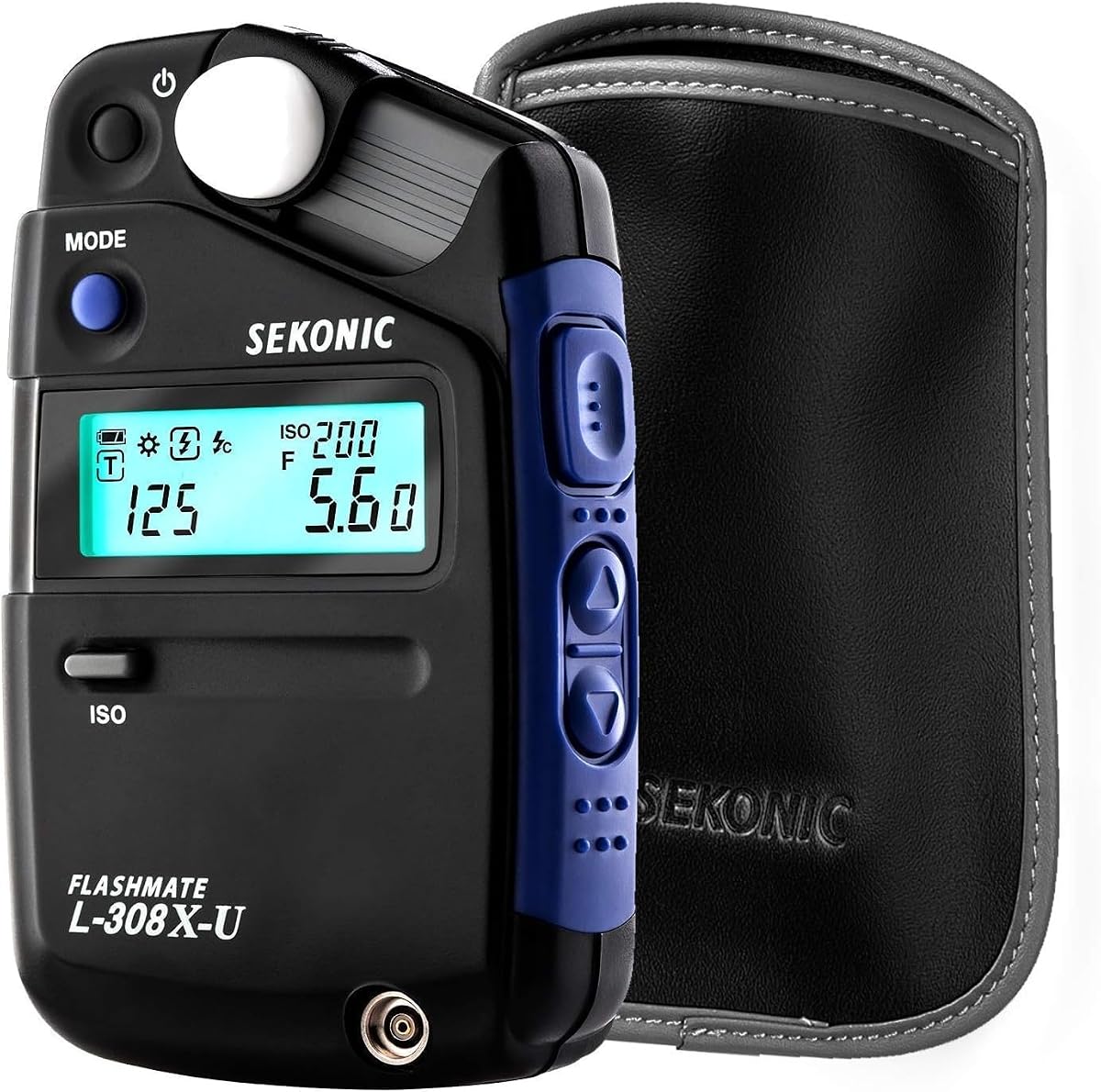
The Sekonic L-308X-U Flashmate is a compact digital incident and reflected exposure meter designed for modern photographers and filmmakers. It offers exposures accurate down to a tenth-of-a-stop for both ambient and electronic flash light readings in full-stop mode.
We may earn a commission when you buy through this link, at no additional cost to you.
It features dedicated Photo Mode for still photographers and Cine modes for DSLR and mirrorless videographers who need precise frame rate control. The LCD auto backlight ensures readability in low light conditions without manual intervention.
The ambient EV range spans 0 to 19.9, providing versatility for high-contrast scenes. Its pocket-sized design makes it the perfect companion for street photography or travel where carrying bulky gear is not practical.
This meter is ideal for hybrid shooters who need both flash and ambient measurement in a lightweight package. Its high accuracy and specialized modes make it a top choice for professionals balancing still and motion work seamlessly.
Dedicated Photo and Cine modes streamline settings selection for different shooting scenarios.
The compact form factor allows for easy carrying in a camera bag without adding bulk.
We may earn a commission when you buy through this link, at no additional cost to you.
This version of the Sekonic L-398A Studio Deluxe III comes with a full kit including strap and case for immediate professional use. It is a favorite with cinematographers for its ability to measure incident and reflected light readings accurately and consistently.
We may earn a commission when you buy through this link, at no additional cost to you.
The 180-degree Lumisphere allows for general readings of three-dimensional objects, while the Lumidisc enables selective area readings for specific needs. The swivel head design allows you to hold down the metering button and walk the set to check light levels easily.
No battery is required for operation, ensuring this device remains functional throughout long shoots without power interruptions. The included accessories expand versatility for varied lighting measurement scenarios, making it ready for complex studio setups straight out of the box.
This kit is ideal for cinematographers who need a complete solution for precise exposure control. The ergonomic design and included accessories make it a robust choice for those demanding high reliability and workflow efficiency on set.
Inclusion of Lumidisc and case ensures you are ready for various shooting environments immediately.
The swivel head allows easy movement and adjustment without losing sight of the display.
We may earn a commission when you buy through this link, at no additional cost to you.
Selecting the right light meter requires understanding your specific workflow needs and technical requirements for accurate exposure.
Choose between incident meters that measure light falling on the subject and reflected meters that measure light bouncing off it. Incident meters are generally preferred for consistent results in controlled lighting scenarios.
Incident meters provide more reliable data for exposure calculation regardless of subject reflectance.
Analog meters often use amorphous photocells that require no batteries, while digital models rely on standard cells like AAA or 9V. Battery-free options ensure reliability in remote locations where charging is difficult.
Battery-free operation eliminates downtime and cost of replacement for long-term field use.
Professional users need meters that offer accuracy within one-tenth of a stop. Cheaper digital models may vary by a full stop, which can lead to under or overexposed shots in critical situations.
Check the deviation percentage listed in specs to ensure it meets your quality standards.
Analog dials offer quick visual feedback without menu diving, whereas digital LCDs provide exact numeric values. Consider your workflow speed; analog is often faster for rapid adjustments during a shoot.
Digital displays offer precise numbers while analog dials provide faster visual feedback.
Field photographers need lightweight devices that fit in a pocket or small bag. Look for durable construction that can withstand drops and dust in professional environments.
Compact size and rugged design are essential for tools carried daily.
Ensure the meter covers the luminosity range of your typical environment, from dark studios to bright outdoors. Many models offer ranges up to 200,000 Lux which covers almost all scenarios.
Verify the Lux range matches your brightest and darkest shooting conditions.
Consider features like temperature measurement, peak recording, or dual unit toggling. These add utility if you need environmental data alongside light levels.
Extra functions increase versatility but may add complexity to simple workflows.
Professional analog meters can be expensive but last for decades. Basic digital options offer value for occasional users who do not need precision.
Invest in a high-quality model if you rely on accurate exposure daily.
To use an incident light meter, position the diffusing dome at the subject's location and point it toward the camera. Press the button to take a reading, then adjust your shutter or aperture based on the displayed values.
Keep the sensor clean and protected when not in use. Use the provided case to prevent dust from entering the sensor window, which can affect accuracy over time.
For analog models, ensure you are reading the dial correctly under the lighting conditions. If the sensor gets dirty, gently wipe it with a soft cloth to maintain precise light capture.
Analog meters offer reliable battery-free operation and faster visual feedback which many professionals prefer. However, digital meters provide exact numeric readouts and advanced features like peak recording. The best choice depends on your workflow priorities and need for specific data.
Most analog meters do not require user calibration as they are factory tuned. If accuracy is in doubt, compare readings against a trusted reference meter under controlled lighting conditions. Some high-end digital models allow for sensor offsets if needed.
Lux and Foot-Candles are both units of illuminance. One Foot-Candle equals approximately 10.76 Lux. Professional models often allow toggling between these units to suit regional preferences or specific industry standards.
Yes, a diffusing dome is essential for incident light readings to simulate the light falling on a human subject. It ensures measurements are accurate for photography. Removing it allows for reflected light measurements in specific situations.
High-quality analog meters can last decades with proper care due to their mechanical simplicity. Digital models have a shorter lifespan depending on battery management and sensor health. Proper storage is key to extending any model's life.
Yes, especially models designed for cinematography like the Sekonic Studio Deluxe. They support continuous reading modes and shutter angles necessary for video. Ensure the meter supports the frame rates you use for accurate exposure.
Our top picks highlight the Sekonic L-398A for reliability, the MT-92H for split sensing, and the Fluke 941 for industrial robustness. Each offers unique advantages suited to different professional requirements and budget constraints.
Prioritize battery-free operation if you shoot frequently in remote locations where charging is a challenge. For those needing advanced digital features, the Sekonic L-308X-U offers a compact hybrid solution.
Remember to check current prices and availability as market conditions change frequently. Investing in the right meter ensures consistent exposure and protects the integrity of your photography and cinematography work.