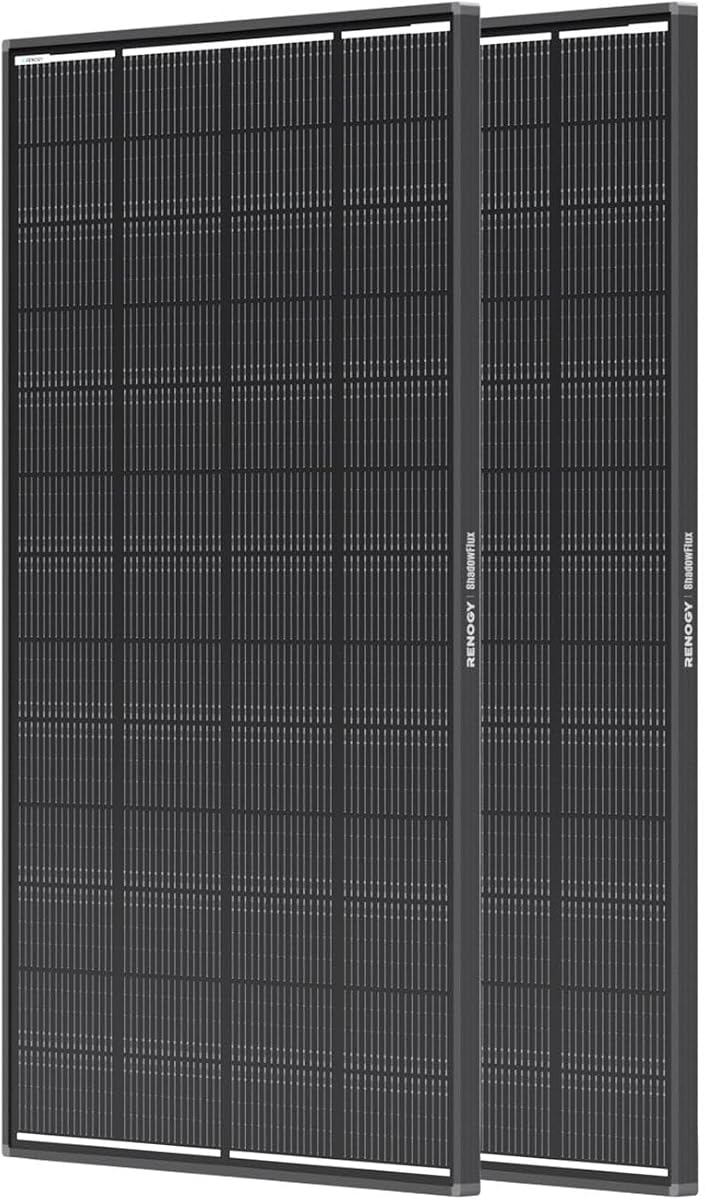
Renogy ShadowFlux Solar Panel 400 Watt
4.5Editor score
N-Type 25% High-Efficiency
ShadowFlux Anti-Shading Technology
Compact and Lightweight Design
This guide compares the top 400 Watt Solar Panels for Rvs based on efficiency, durability, portability, and real-world performance for off-grid power needs.
Finding reliable power on the road requires high-performance solar solutions that balance output with space constraints. A solid 400 watt panel system can handle laptops, fridges, and essential appliances without heavy battery dependence. We evaluate key specs like efficiency ratings and weather resistance to ensure your setup lasts.
We analyzed ten leading models from trusted brands using real-world data and user feedback. Our comparison focuses on conversion rates, mounting flexibility, and compatibility with common power stations. This list covers fixed and portable options suitable for vans, trucks, and campers seeking energy independence.
Each pick highlights specific strengths such as bifacial gain, N-type cells, or foldable designs. You will see detailed pros and cons to match your unique camping style. Note that availability and pricing fluctuate frequently so verify current stock before ordering your next upgrade.
4.5Editor score

4.6Editor score

4.1Editor score
We compare all ten top-rated 400 watt solar panels for RVs side-by-side. This table highlights key specifications such as efficiency ratings, cell type, and weather resistance to help you choose the perfect fit for your off-grid setup.


The JJN 400W Bifacial Solar Panel offers a unique dual-sided design that maximizes energy capture. Rated at 4.6 stars, it stands out for its ability to generate power from reflected light. This is ideal for RVs parked on snow or gravel where rear-side gain boosts daily output.
We may earn a commission when you buy through this link, at no additional cost to you.
Its 23% efficiency rating ensures strong performance even in partial shade or cloudy conditions. The slim footprint makes it easy to fit on smaller rooftops or mount on ground frames. Built with corrosion-resistant aluminum and IP67 connectors, it withstands harsh outdoor elements effectively.
While highly efficient, you must position it over a reflective surface to realize the full 30% rear gain. The two 200W modules require separate mounting or wiring which adds slight complexity compared to a single monolithic panel.
Buy this if you want high output in limited space and have flexibility in placement. It is perfect for off-grid cabin or RV setups where maximizing every watt matters. The durable build ensures years of reliable service.
Captures sunlight from both front and rear surfaces to increase total energy yield.
Slim footprint allows easy mounting on tight RV roofs or portable ground frames.
We may earn a commission when you buy through this link, at no additional cost to you.
The Renogy ShadowFlux Solar Panel 400 Watt uses advanced N-Type cells for top efficiency. With a 4.5 rating, it excels in challenging environments due to its anti-shading technology. This ensures stable power even when parts of the panel are covered by trees or roof vents.
We may earn a commission when you buy through this link, at no additional cost to you.
ShadowFlux technology significantly reduces hot spots and micro-cracks. The panel is 7% smaller and lighter than traditional PERC models, saving valuable roof space. IP67-rated encapsulation protects against rain, snow, and small hail for long life.
Its higher cost reflects premium materials and engineering. Mounting hardware is sold separately so factor that into your budget. Performance in hot climates remains strong thanks to low temperature coefficient design.
Choose this for maximum efficiency and reliability in high-end RV builds. The 25-year output warranty provides confidence in long-term energy production. It is a top choice for those prioritizing performance over initial savings.
Delivers enhanced power generation even in shaded areas caused by obstacles or debris.
Features 25% conversion efficiency with reduced hot spots and micro-cracks.
We may earn a commission when you buy through this link, at no additional cost to you.
The DOKIO 400W Monocrystalline Solar Panel delivers solid performance at a budget-friendly cost. Rated at 4.1 stars, it simplifies installation with its single-unit design and longer leads. This reduces the need for extra connectors and makes wiring easier for DIY installers.
We may earn a commission when you buy through this link, at no additional cost to you.
Its lab rating of 400W provides reliable output under standard test conditions. The aluminum frame and sealed junction box withstand rain and splashes. Pre-drilled holes align with common Z-brackets for quick mounting on RV roofs or sheds.
While efficiency is standard compared to high-end N-type options, the price makes it accessible. Real-world output depends on sunlight and controller quality so match with a good MPPT charge controller. It is ideal for users seeking simple power solutions.
Buy this for cost-effective power expansion on a limited budget. It works well for small RV setups needing basic lighting and device charging. The simplified wiring saves time and ensures durable daily use.
Replaces four 100W panels with one unit reducing hardware and connection points.
3m leads reach farther eliminating need for add-on extension cables.
We may earn a commission when you buy through this link, at no additional cost to you.
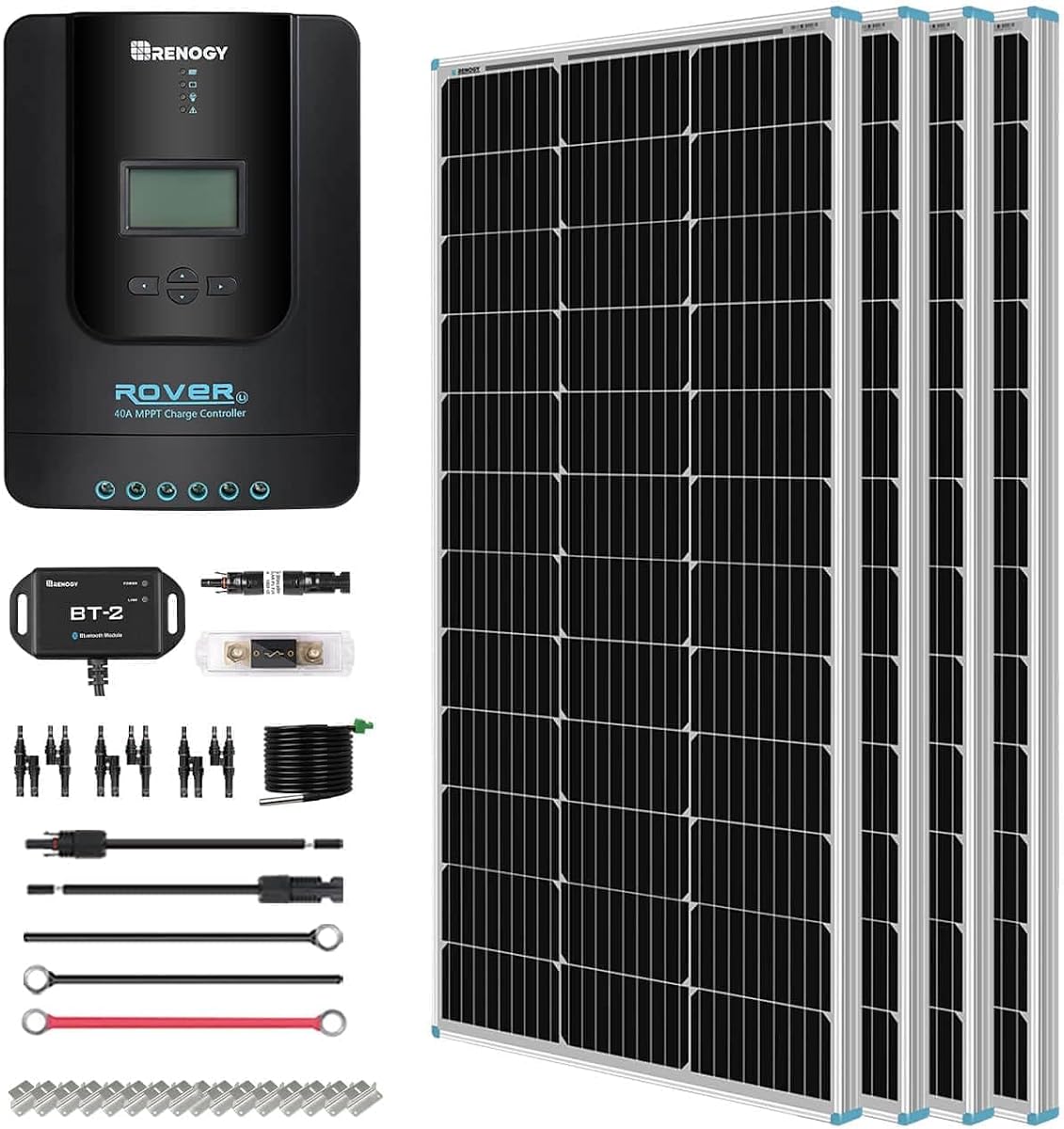
The Renogy 400Watt Premium Solar Kit includes everything needed for a full system. Rated 4.5 stars, it features a 40A MPPT controller to maximize battery charging efficiency. This all-in-one approach saves time on part selection and ensures compatibility out of the box.
We may earn a commission when you buy through this link, at no additional cost to you.
It supports up to 32V battery systems making it versatile for many RV setups. The kit comes with panels, controller, and cables ready to install. Renogy's reputation for support adds value for first-time solar buyers.
While more expensive than panels alone, the included controller adds significant value. Installation remains simple but requires adequate roof space for four panels. Check voltage compatibility with your existing battery bank before ordering.
Choose this kit if you want a complete system without sourcing parts separately. It is great for upgrading from no solar to a robust setup. The trusted brand ensures reliable performance and support.
40A MPPT charge controller ensures efficient battery charging and power management.
Kit includes panels, controller, and necessary cables for a complete setup.
We may earn a commission when you buy through this link, at no additional cost to you.
The CTOLITY 400W Portable Panel is designed for mobility and quick setup. With a 4.4 rating, it offers 23% efficiency in a foldable format. It works seamlessly with power stations like Jackery and EcoFlow making it ideal for camping or emergency backup.
We may earn a commission when you buy through this link, at no additional cost to you.
Its lightweight design allows easy transport in a vehicle trunk. The waterproof Oxford cloth protects against dust and splashes. Kickstands ensure stable placement on ground surfaces to maximize sunlight exposure throughout the day.
While great for temporary use, it is not intended for permanent roof mounting. The auto-reboot feature handles light changes without manual adjustment. Setup takes minutes but requires positioning near the power station.
Buy this if you prioritize portability and emergency power. It is perfect for mobile off-grid trips where fixed panels aren't feasible. The durable build ensures reliable charging in various outdoor conditions.
Folds down easily for compact storage and transport in RV or vehicle.
Designed to work with Jackery, EcoFlow, and other major portable power stations.
We may earn a commission when you buy through this link, at no additional cost to you.
The Greenmagic 400W Foldable Panel features versatile mounting options for ground or side use. Rated 4.6 stars, it includes four adjustable kickstands for optimal angle. Hanging loops let you suspend it from a vehicle side or tent frame for flexible placement.
We may earn a commission when you buy through this link, at no additional cost to you.
Its efficiency range reaches up to 23.5% with monocrystalline silicon cells. The Oxford cloth outer protects against moisture and dust. A robust rubber handle makes carrying it like a briefcase simple for on-the-go use.
While great for ground setups, it is not designed for permanent roof mounting. Weight is higher than some portable panels so factor in transport ease. The IP65 rating handles splashes but avoid heavy rain exposure.
Choose this for camping or situations where you need to adjust position often. The multiple kickstands offer stability on uneven terrain. It is an excellent companion for power stations needing flexible input.
Set up in seconds with adjustable kickstands for optimal sunlight angle.
Edge loops allow mounting from vehicle sides or tents for flexible positioning.
We may earn a commission when you buy through this link, at no additional cost to you.
The E-POWO 400W Solar Charger supports a wide range of power stations with its multi-port design. With a 4.3 rating, it features connectors for Anderson, DC, and XT60. This versatility eliminates the need for extra adapters when switching devices.
We may earn a commission when you buy through this link, at no additional cost to you.
Its ETFE coating and IP67 rating protect against dust and water effectively. Three kickstands ensure stability on various ground surfaces. The accessory pouch helps organize cables during travel and keeps connectors clean.
Managing multiple cables can be tedious but offers unmatched compatibility. The 23.5% efficiency ensures strong output even in cloudy weather. It is best for users with multiple power station types or changing gear needs.
Buy this if you need broad compatibility with different charging ports. It is ideal for travelers who switch equipment often. The durable build ensures reliable power generation in rugged conditions.
Equipped with solar connector to Anderson/XT60/DC7909/DC5521/DC8020/DC5525/DC35135 connector.
Advanced ETFE lamination provides IP67 waterproof protection for outdoor durability.
We may earn a commission when you buy through this link, at no additional cost to you.
The 400 Watt N-Type Panel uses advanced Grade A+ cells for high performance. With a 4.4 rating, it achieves up to 25% efficiency via 18BB busbars. This technology reduces hot spots and improves energy conversion under real-world conditions.
We may earn a commission when you buy through this link, at no additional cost to you.
Reverse current blocking diodes prevent energy drain at night. The IP68-rated junction box ensures dust and water resistance. Oxygen-free copper wire lowers resistance for faster and more efficient power transmission.
While brand support is growing, its specs rival top competitors. The 25% efficiency delivers strong output even in low-light scenarios. It is a solid choice for technical buyers seeking high specs at a fair price.
Choose this for high efficiency and modern N-type technology. It fits well in fixed RV roofs needing reliable power. The IP68 rating ensures it withstands harsh elements without degradation.
Utilizes advanced N-Type A+ Grade solar cells with 18BB busbar technology.
Polyurethane-filled junction box prevents water reaching wires inside.
We may earn a commission when you buy through this link, at no additional cost to you.
The Callsun N-Type Bifacial Panel delivers exceptional performance with 25.6% efficiency. With a 4.8 rating, its TwinCell Anti-Shade tech allows one half to produce power even if the other is shaded. This maintains output in variable light or partial cover conditions.
We may earn a commission when you buy through this link, at no additional cost to you.
Bifacial technology captures rear-side reflected light for up to 30% more power. It fits Class B van roofs easily due to compact dimensions. The low temperature coefficient ensures stable output in hot climates.
Using two 200W panels requires separate mounting or wiring which takes effort. Maximum gain needs a reflective surface like gravel. Despite this, the efficiency and shade tolerance make it a top technical choice.
Buy this for high efficiency and shade resilience. It is ideal for RVs with limited roof space or complex shading. The long warranty ensures lasting value for off-grid energy needs.
Splits panel into independent halves for better shading tolerance and stable output.
Built with advanced N-type cells delivering up to 25.6% conversion efficiency.
We may earn a commission when you buy through this link, at no additional cost to you.
The Callsun 400 Watt Panel system uses four compact 100W units for flexibility. With a 4.5 rating, each panel features N-Type cells for 25% efficiency. Their small size allows placement on irregular surfaces or tight corners where larger panels won't fit.
We may earn a commission when you buy through this link, at no additional cost to you.
16BB busbars reduce hot spots and ensure stable output. Each unit is 15% smaller than traditional panels making them easy to handle. Pre-drilled holes simplify mounting on RVs, boats, or cabins without extra hardware.
Managing four units means more wiring and mounting points. However, flexibility helps maximize roof real estate on smaller vehicles. IP68 protection ensures durability against rain and dust long-term.
Choose this for flexible layout and easy handling. It suits RVs needing modular expansion or complex roof shapes. The high efficiency and compact design offer reliable energy generation.
Each 100W panel measures 31.1 x 22.7 x 1.1 inches for easier mounting.
Low temp coefficient minimizes power loss under extreme heat conditions.
We may earn a commission when you buy through this link, at no additional cost to you.
Choosing the right 400 watt solar setup requires balancing efficiency, mounting, and durability. This guide outlines key factors to consider before making your purchase.
Look for N-type or monocrystalline cells which offer higher efficiency and better temperature resistance. Traditional P-type cells are less efficient and lose more output in heat. N-type models often cost more but deliver more power for the same area.
Efficiency percentage shows how much sunlight converts to electricity. Higher ratings mean more power from limited roof space. Aim for 23% or above for best value and performance on the road.
Ensure junction boxes and connectors have IP65 or IP68 ratings. This protects against rain, dust, and corrosion. High ratings ensure longevity in outdoor RV environments without leaks.
Decide between fixed roof panels or foldable portable ones. Fixed panels save space but require drilling while portable ones are flexible but need setup. Consider your travel needs before choosing.
Check that your panels match the voltage and connectors of your batteries or power stations. MPPT controllers improve charging efficiency significantly. Ensure cables match standard MC4 or specific input types.
This measures power loss in heat. Lower coefficients like -0.3% per C maintain output in summer. High heat reduces voltage so look for low temperature coefficients for desert camping.
Choose panels with strong frames and long warranties. Look for 10-year product support and 25-year performance guarantees. Durability ensures years of reliable service without replacement costs.
Measure your roof before buying. If space is limited, consider compact bifacial or multiple smaller units. Bifacial panels produce more power on the same footprint. Plan layout to avoid shading from vents or vents.
Clean the panels regularly with water and a soft cloth to remove dust. Avoid abrasive materials that scratch the surface and reduce efficiency. Do this monthly for best power generation.
Mount your panels securely using brackets rated for wind load. Ensure all connectors are tight to prevent arcing. Periodically check cables for damage from heat or rodents.
Optimize output by adjusting tilt angles seasonally. Summer needs less tilt while winter benefits from steeper angles. If portable, angle the panel toward the sun at midday for maximum power.
Yes, with a sufficiently large battery bank. A 400 watt array can recharge batteries used during the day. Add storage for night use to keep fridges running overnight without generator support.
Yes, an MPPT controller is highly recommended for 400 watt setups. It maximizes power harvest compared to older PWM controllers. This improves battery charging speed and overall system efficiency significantly.
Monocrystalline cells offer higher efficiency and better heat resistance. Polycrystalline are cheaper but take more space for same output. For RVs, monocrystalline is standard due to compact size.
Yes if you have basic tools and knowledge. Sealants and brackets are needed for waterproofing. If unsure, consult a professional to avoid roof leaks that cause damage.
Expect 1500 to 2000 watt hours per day depending on sunlight. Clouds and shading reduce this output. Real results vary by location and season. Check local weather for estimates.
Bifacial panels can add up to 30% power if mounted over reflective surfaces. For standard flat roofs the gain is minimal. Choose them only if you can maximize rear exposure for value.
They still work but produce less power. High-quality panels maintain stable output in low light. Expect 10 to 25% of rated power on heavy overcast days.
Use mild soap and water with a soft sponge. Avoid pressure washers or hard brushes that scratch the surface. Clean in morning to avoid burns from hot panels under sun.
Our top picks include the JJN Bifacial Panel for value, Renogy ShadowFlux for premium tech, and DOKIO for budget needs. Each offers distinct benefits tailored to different RV setups. Review specs and compare brands before buying.
Prioritize efficiency ratings, waterproof protection, and mounting compatibility. N-type cells deliver better performance in heat while IP68 ratings ensure durability. Select panels that match your power station and battery voltage for best results.
Prices and availability change frequently so check current listings before finalizing your order. Verify all dimensions fit your vehicle to avoid installation issues. With the right 400 watt panel, you can enjoy reliable off-grid power anywhere.